Last reviewed October 2026
Gravel vs concrete pad for a shed is a cost and use question. Gravel vs concrete for parking in the Las Vegas Valley is often a legal one. This page takes them in that order. It is written for homeowners, and the numbers and rules come from published cost guides and from city, county and HOA documents, each named where it is used. Since quote requests here go to concrete contractors, read us as biased toward concrete, and note that we point out the cases where gravel is the better buy.
Gravel vs concrete pad for a shed
For a small storage shed, gravel is a reasonable, cheaper base. Concrete earns its cost when the shed is heavy, needs a solid floor, or has to be anchored, and when an HOA or the shed itself calls for it.
When a gravel shed base makes sense
- A small prefab or kit shed with its own wood or metal floor frame.
- You want to keep cost down and may move the shed later.
- The spot is inside a turf conversion: SNWA lists rock as an acceptable permeable cover and does not allow concrete in a rebated area.
- Your HOA does not require a specific foundation.
When a concrete shed slab makes sense
- A floorless shed, workshop or metal building that uses the slab as its floor.
- Heavy contents: mowers, tool chests, a workbench, a small vehicle or a gym.
- The shed needs to be anchored down; a slab gives fasteners something solid to grip.
- You want a surface you can sweep, roll equipment across and keep free of weeds and dust.
What a shed slab usually looks like
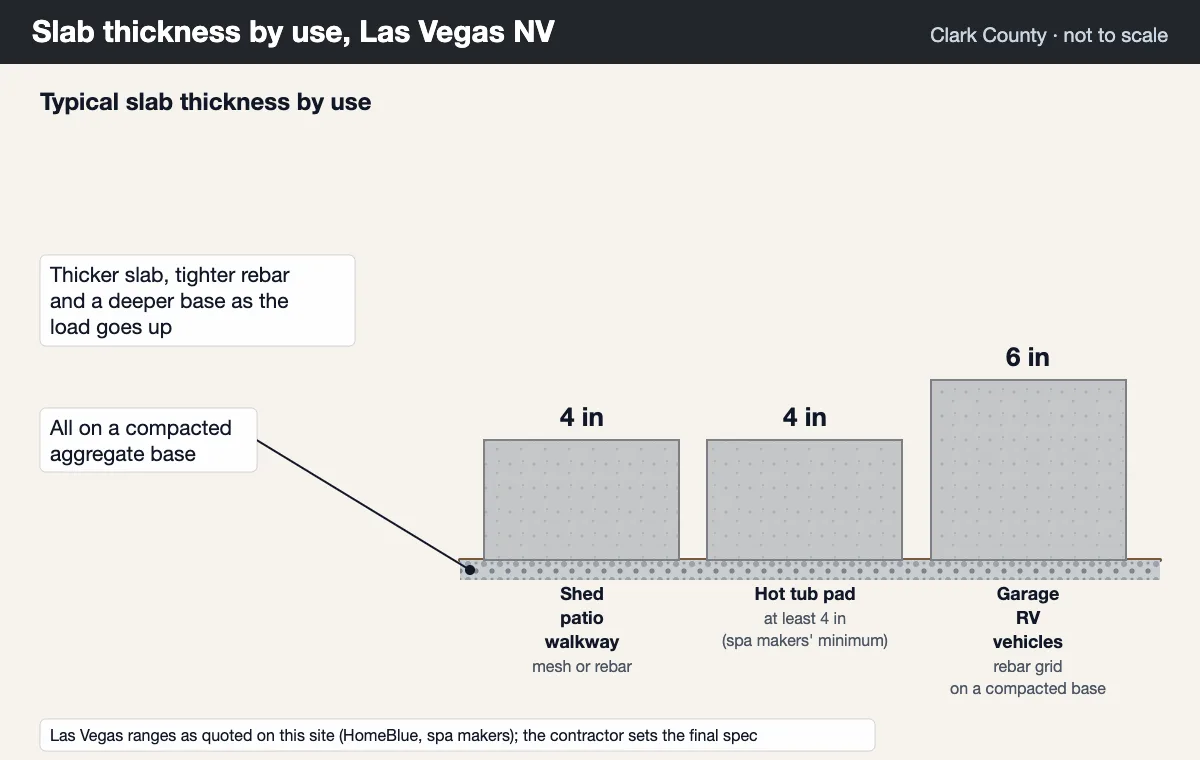
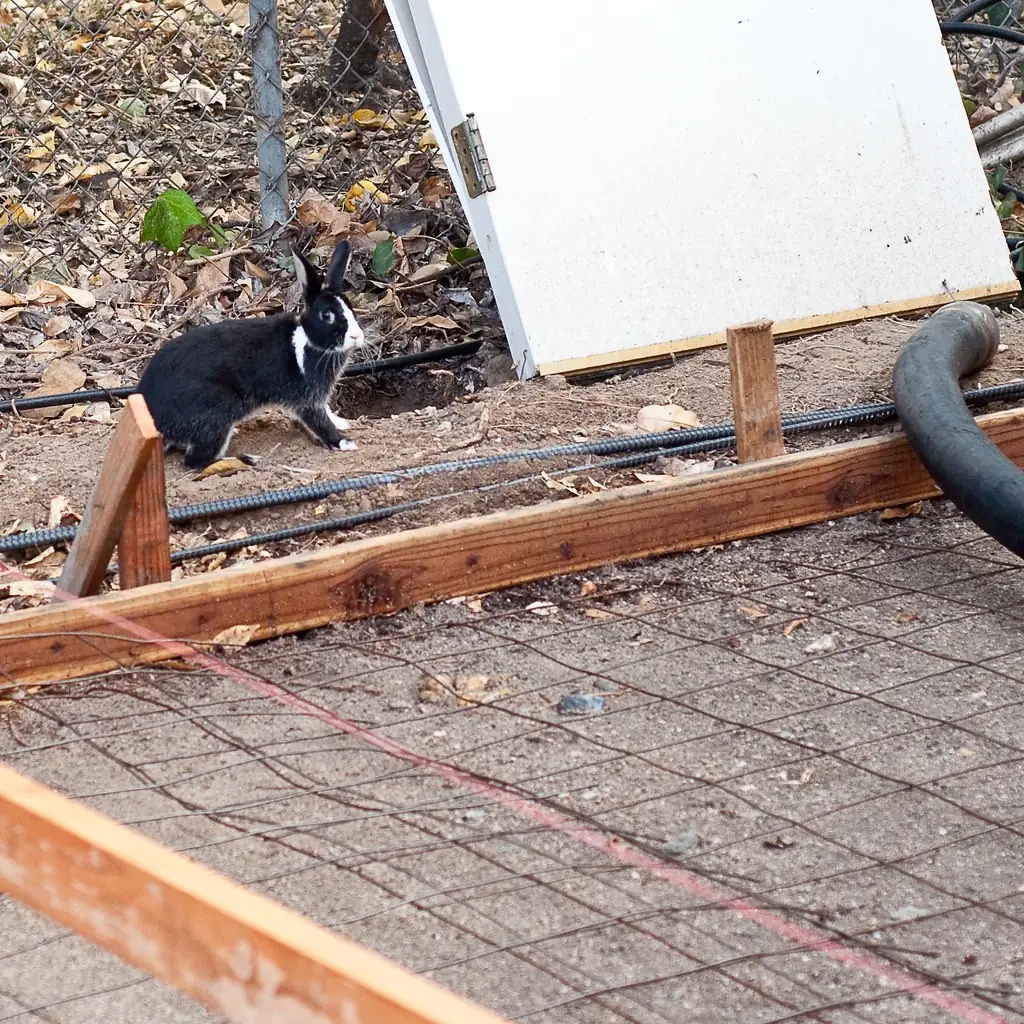
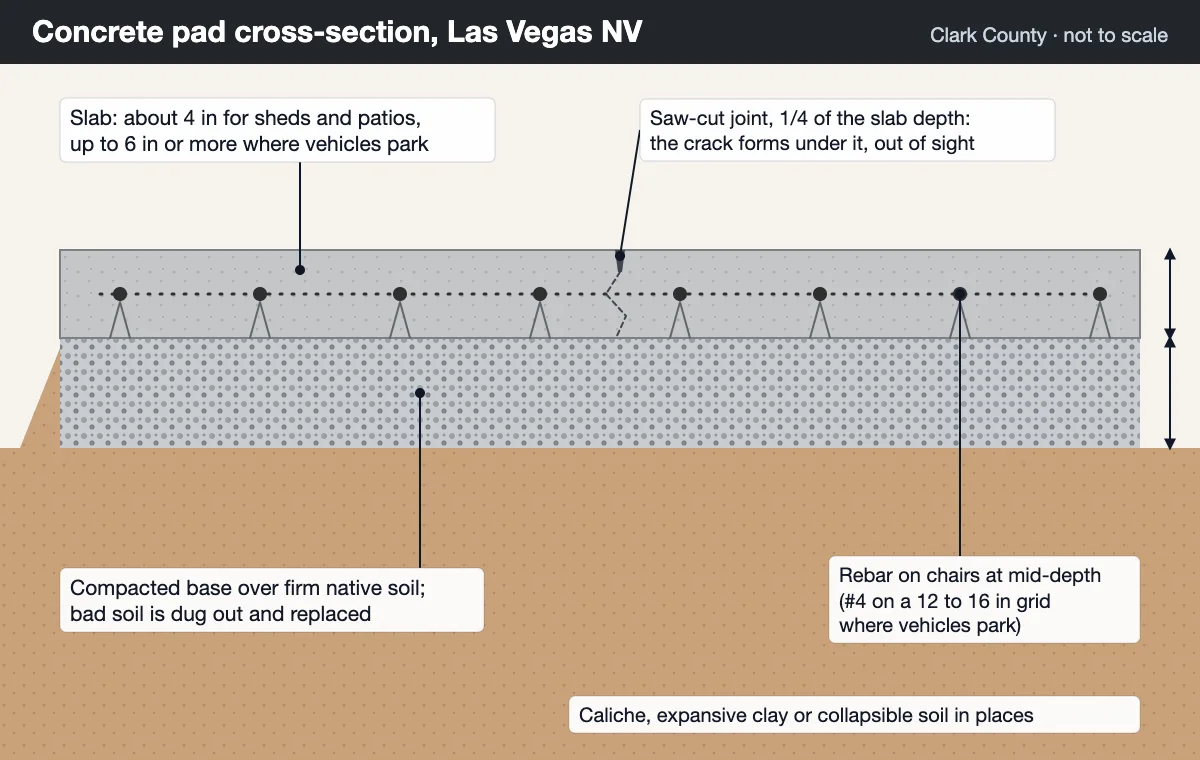
HomeGuide says most shed slabs are about 4 inches thick and typically do not need reinforcement or decoration, and lists shed foundations of 100 to 400 square feet at $600 to $4,800 nationally. The shed slab page covers Las Vegas specifics, and the thickness guide compares shed slabs with heavier uses.
What a gravel base usually looks like
HomeGuide's gravel driveway guide recommends at least 5 to 6 inches of gravel installed in layers: a 3 to 4 inch base of crusher run or crushed stone topped with 2 to 3 inches of the chosen gravel. It names crushed stone over a crusher run base as the best combination because angular pieces interlock when compacted. Crushed stone runs $30 to $60 per ton in that guide. A shed pad carries far less than a driveway, but the same layering logic applies.
Is a gravel pad cheaper than concrete?
Usually yes, though not by as much as people expect once the base is built properly. The figures below are the ones we could source.
| Surface | Installed cost per sq ft | Source (date) | Scope |
|---|---|---|---|
| Gravel driveway | $4 to $10 | HomeGuide (Dec 18, 2025) | National |
| Gravel base under a slab | $1 to $3 | HomeGuide slab cost (Feb 3, 2026) | National, base only |
| Concrete slab | $6 to $12 | HomeGuide slab cost (Feb 3, 2026) | National |
| Concrete pad, unreinforced | $6 to $11 | HomeBlue (Sep 27, 2024) | Las Vegas |
| Concrete slab, reinforced | $7 to $12 | HomeBlue (Sep 27, 2024) | Las Vegas |
Swipe the table sideways to see every column →
Gravel figures are national; no Las Vegas gravel pad price was found. HomeGuide's shed foundation range for 100 to 400 sq ft is $600 to $4,800 nationally. Small concrete pads cost more per square foot because of minimum charges.
Remember the extra cost a gravel choice can create in Las Vegas: if the pad is for parking and your jurisdiction requires pavement, a gravel pad may have to be redone. More on prices in the Las Vegas concrete slab cost guide.
HOA shed rules in the Las Vegas Valley
In a master-planned community, the HOA often decides more about a shed than the county does. Sourced examples:
- Summerlin North: sheds allowed in the rear yard only; a shed taller than the property line wall must be set back at least 5 feet from all perimeter walls; approval is required before work.
- Inspirada (Henderson): prefab sheds permitted in the rear yard; a shed beside a wall or fence may not be taller than it; no running water, electricity or conditioned air.
- Southern Highlands (Enterprise): prefab sheds up to 6 by 8 feet and 6 feet tall are pre-approved; taller sheds need a 5-foot setback from side and rear lines, a tile roof to match the house and neighbor statements.
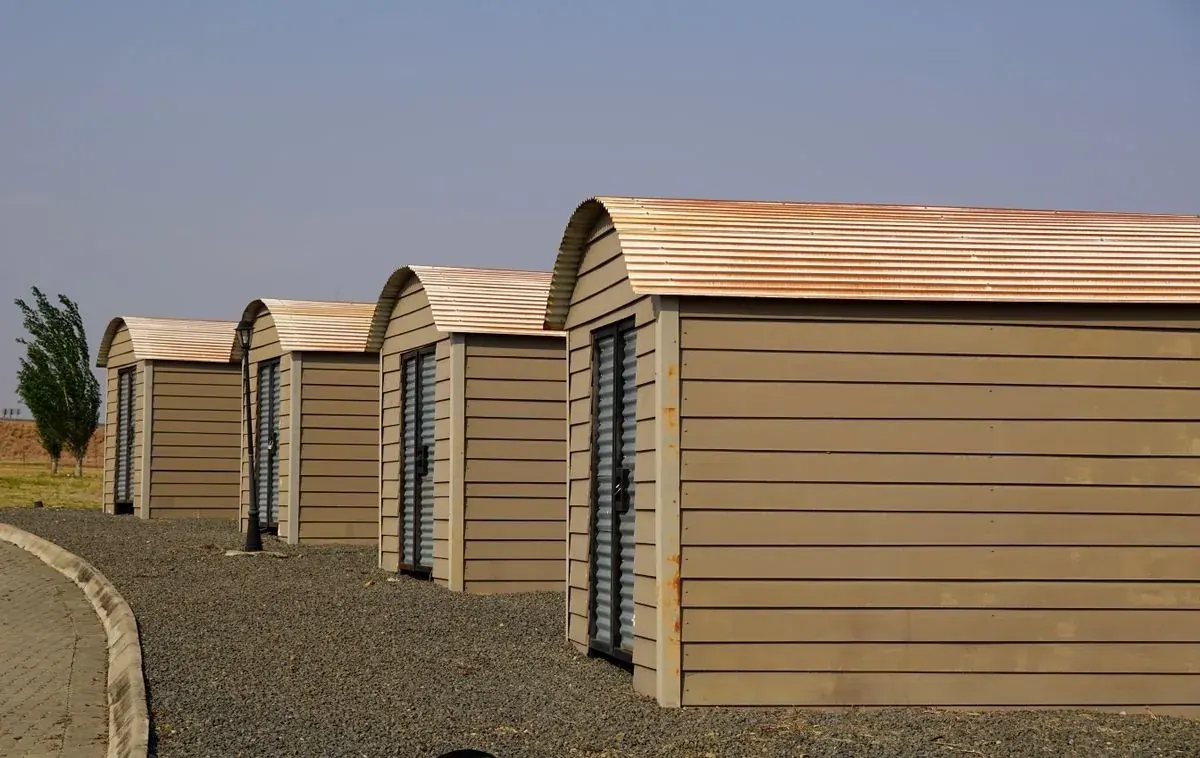
- Providence (northwest Las Vegas): sheds max 10 feet tall with a 5-foot setback; hardscape, which includes a concrete slab, is capped at 20% of the lot.
These are a few communities, not a full list, and sub-associations can be stricter. Read your own HOA's design guidelines before you buy the shed or the base.
Gravel vs concrete for parking: the jurisdiction rules
This is where gravel vs concrete stops being a preference. Every jurisdiction in the valley has its own rule for what a vehicle or RV may be parked on, and several require a paved surface. Concrete meets all of them.
| Jurisdiction | Surface rule | Location limits | Source |
|---|---|---|---|
| Unincorporated Clark County (Spring Valley, Enterprise, Paradise and others) | Inside Hydrographic Basin 212, driveway and parking areas for a single-family lot must be paved with concrete, asphalt, rubberized asphalt or asphaltic concrete; cannot be waived | Parking in unimproved or landscaped areas prohibited; max 3 RVs stored at a residence | Title 30 UDC 30.04.04 (eff. Sep 17, 2026 amendment) |
| Henderson | One extra RV or vehicle space in the front yard or corner side setback must be finished in concrete, asphalt or a similar paved surface; all off-street parking paved and dust-free | That extra space: vehicle max 12 ft tall and 35 ft long | Development Code Ch. 19.12 |
| North Las Vegas | Motor homes, vehicles and RVs parked on a paved surface: concrete, brick, pavers or similar | Rear yard, side yard or corner side yard only; one RV max; 6 ft wall with decorative gates; access may be decomposed granite; front yard max half hardscape | NLVMC 17.24.040 |
| City of Las Vegas | Title 19 PDF: all parking and vehicle storage, including RVs in residential districts, on paved areas. 2018 code enforcement FAQ: rear yard RVs may be on 2-inch pavers, 2-inch decomposed granite with defined borders, concrete, asphalt, gravel or chat | Front yard vehicles on concrete, asphalt or 2-inch pavers full length and width; lots under 0.2 acre may not keep an RV or trailer over 24 ft | Title 19 parking standards; Code Enforcement Top 20 FAQ (2018) |
| Boulder City | Not confirmed in our research | Building permit exemptions for driveways carry a zoning review requirement | Work Exempt from Building Permit (May 21, 2026) |
Swipe the table sideways to see every column →
Compiled from each jurisdiction's own code or guidance, fetched October 2026. Whether all of the urban valley lies inside Hydrographic Basin 212 is not stated in the Title 30 text we read. The two City of Las Vegas sources disagree on gravel, so confirm with the city before relying on a gravel RV pad.
Reading the City of Las Vegas rule carefully
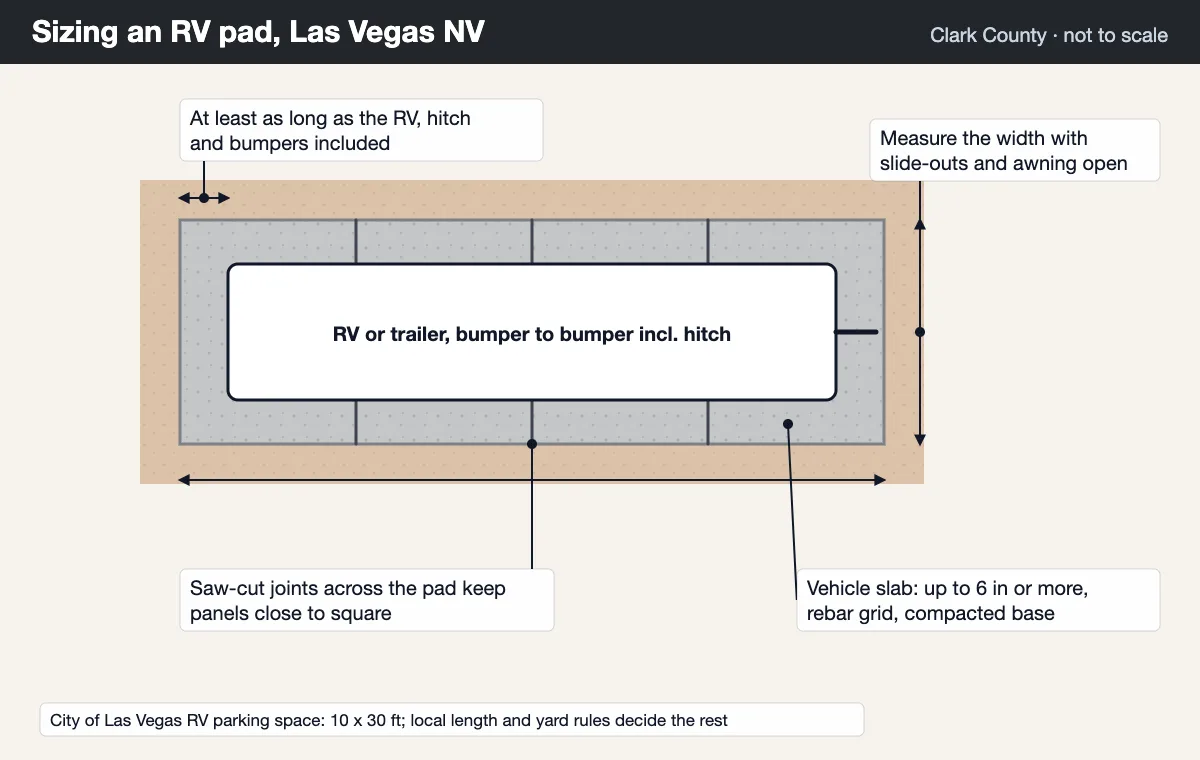
The City of Las Vegas is the one place where gravel might be allowed for an RV in the rear yard. Its 2018 code enforcement FAQ lists gravel or chat, decomposed granite with defined borders, 2-inch pavers, concrete and asphalt as acceptable rear-yard surfaces if they cover the full length and width of the RV or trailer. The city's Title 19 parking standards PDF, on the other hand, says all parking and vehicle storage, including RV parking in residential districts, shall occur on paved areas. We could not confirm which wording the city enforces today, so treat a gravel RV pad in the city as something to confirm first, not something to assume.
Unincorporated Clark County: dust rules either way
Title 30 also says that outside Basin 212, driveways and parking areas need not be paved but are subject to dust control requirements, and that paving, alternative paving and dust control measures cannot be waived because they come from the Clark County Air Quality Regulations. In other words, an unimproved dirt or loose gravel parking spot is not a safe default anywhere in the county.
Henderson and North Las Vegas: paved, with limits
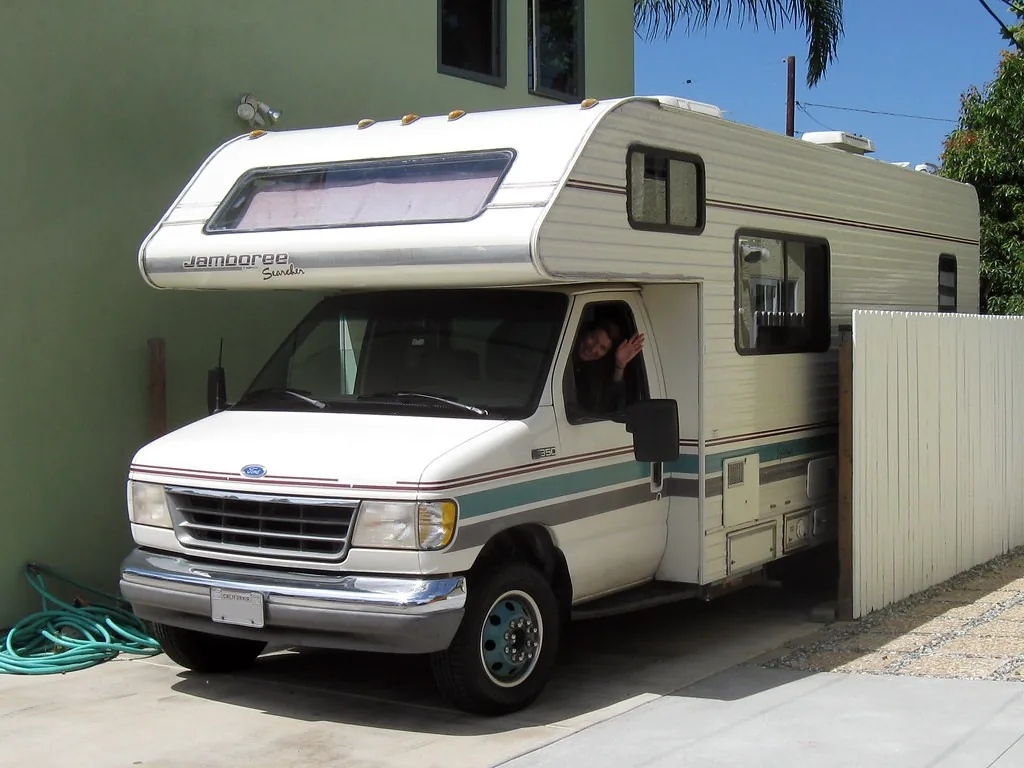
Henderson allows one additional RV or passenger vehicle space in a front yard or corner side setback, finished in concrete, asphalt or a similar paved surface, for a vehicle no taller than 12 feet or longer than 35 feet. North Las Vegas allows RV parking only in the rear, side or corner side yard, on concrete, brick, pavers or similar, behind a wall at least 6 feet high with decorative gates. The access route there may be decomposed granite, but the parking spot itself must be paved.
HOA rules for parking pads
HOAs can be stricter than the city. Inspirada does not permit asphalt, sand or gravel driveways. Providence considers RV pads only with enough side-yard room behind the front setback, a 6-foot wall and a 6-foot screened double gate, with at least 6 feet between the wall and the house and 10 feet between the rear wall and the pad. Southern Highlands limits driveway width to the garage footprint.
Gravel vs concrete for a carport or side yard
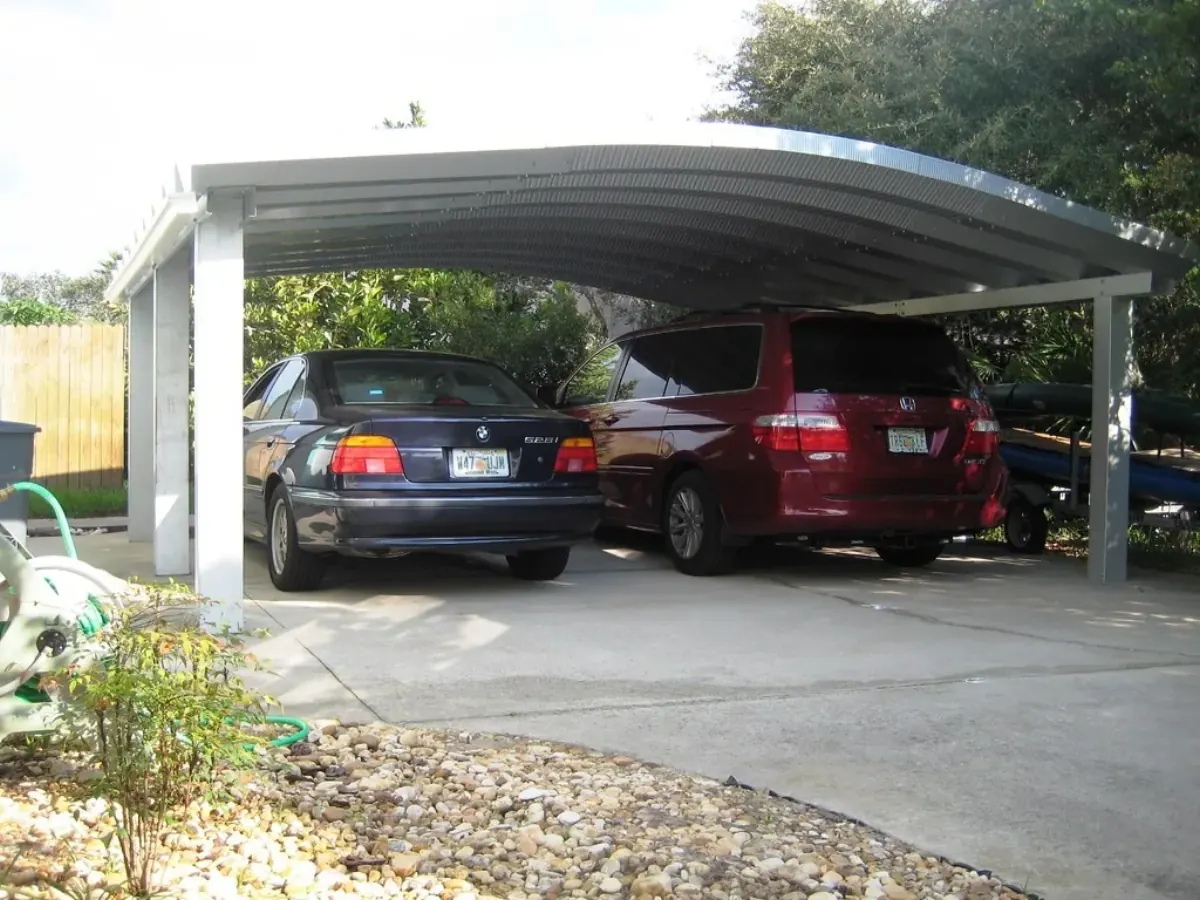
A carport over a parking space is still a parking space, so the surface rules above apply underneath it. The carport slab page covers that job. A side yard that only carries foot traffic and trash bins has more freedom, and the side yard concrete page compares the options there.
Permits for either pad
A building permit is not required for flat slabs and walks up to 30 inches above grade, or for one-story detached sheds up to 200 square feet without plumbing or mechanical work, in any of the valley's five jurisdictions. Setbacks still apply: the City of Las Vegas, for one, requires detached accessory structures in the rear yard to sit at least 3 feet from side and rear lines and 6 feet from the house. The permit guide has the full picture.
Next steps
If concrete is the answer, see the shed slab, concrete RV pad and RV pad size pages, check the service area, or send a quote request.