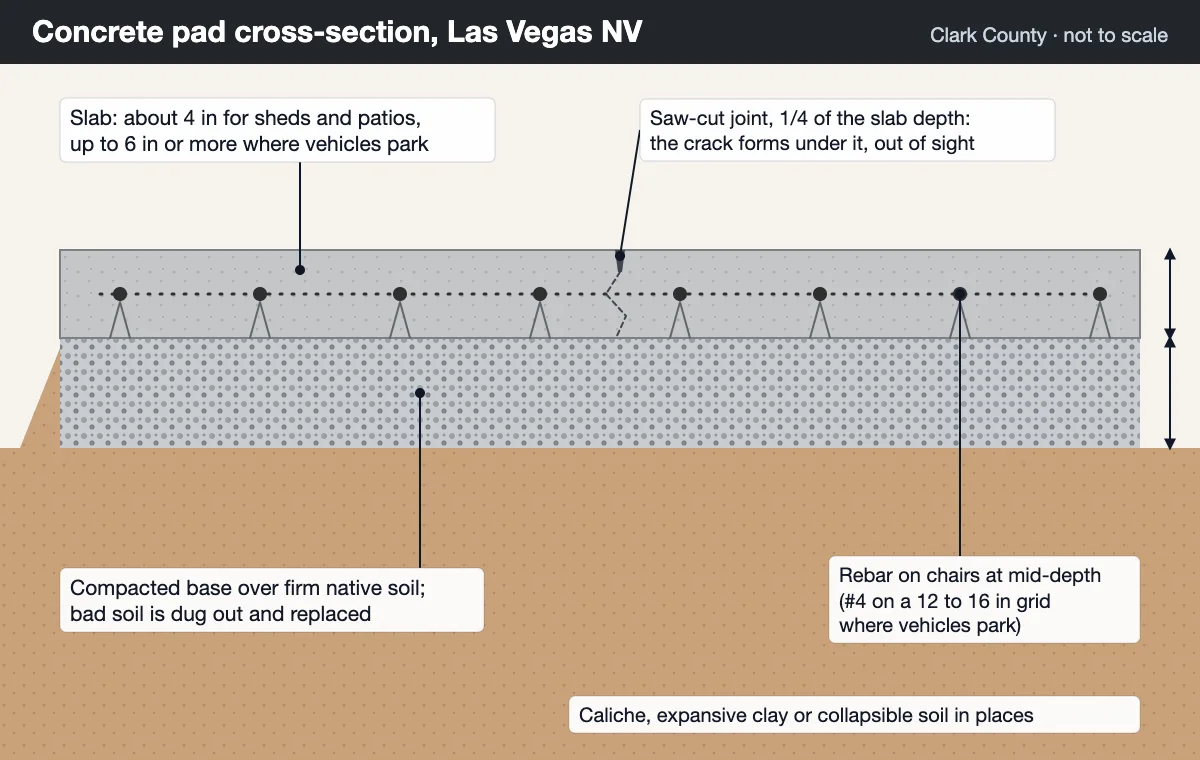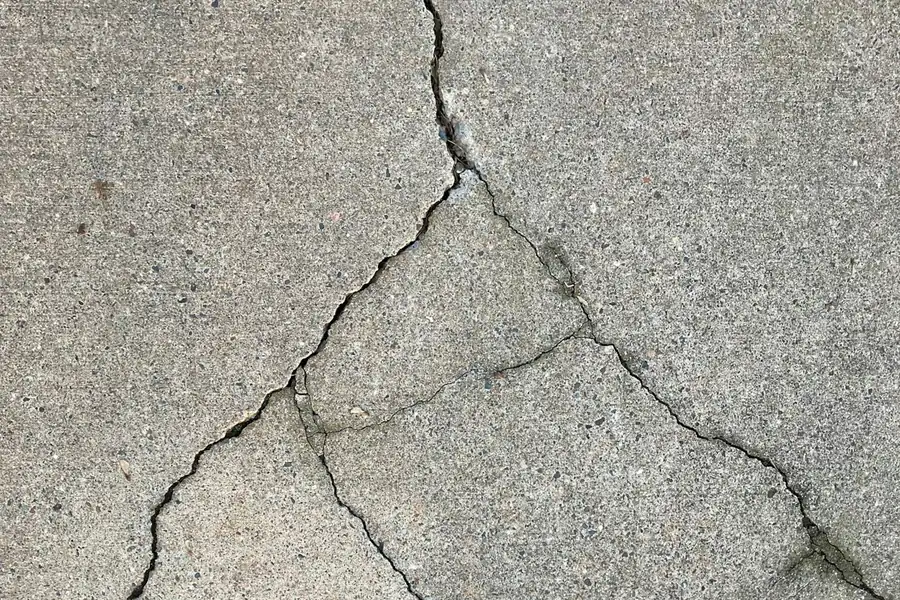
Last reviewed October 2026
Concrete slab cracks are the most common worry homeowners have about outdoor concrete, and most of them are less serious than they look. This page covers patios, pads, walkways and driveway extensions: on-grade slabs. It is not a guide to house foundations. If you see cracks in a home's foundation or floor slab, that calls for a structural engineer or a registered design professional, not a concrete flatwork contractor.
Should a concrete slab crack?
Some cracking is expected. ACI's guides to floor and slab construction (ACI 302.1R) and slab-on-ground design (ACI 360R) both say it is unrealistic to expect crack-free and curl-free floors regardless of the best design and construction practices, and that owners should be told it is normal to expect some cracking on every project. NRMCA puts it the same way: all concrete has a tendency to crack, and completely crack-free concrete is not possible.
The reason is shrinkage. Concrete is weak in tension, and as it sets and dries it shrinks. When the ground, a wall or the slab's own weight holds it in place, that shrinkage builds tension until the concrete cracks. The job of good construction is to control where those cracks go, not to promise there will be none.
Types of concrete slab cracks and what causes them
NRMCA's guide to cracking concrete surfaces lists the common forms below. The table sorts them by what you would see on a backyard slab.
| Crack type | What it looks like | Main cause | Usually serious? |
|---|---|---|---|
| Plastic shrinkage | Short, roughly parallel surface cracks 1 to 3 ft apart that do not reach the slab edge; appear within hours | Surface dried before the concrete set: wind over 5 mph, low humidity, heat | Rarely affects strength; can let water in |
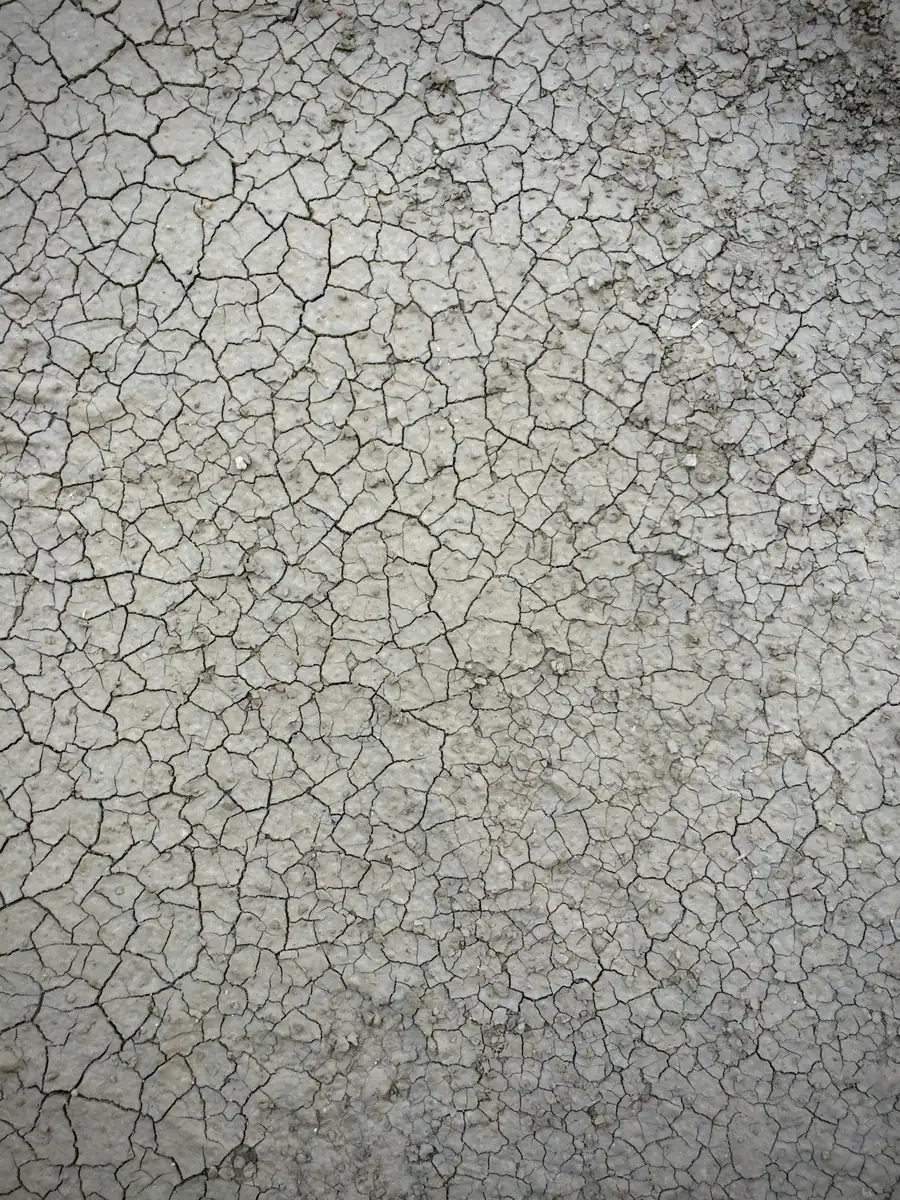
| Crazing | Fine web of surface cracks, cells up to about 1.5 in across, rarely over 1/8 in deep; visible by the end of week one | Shrinkage of a paste-rich surface layer; over-finishing, poor curing | Not a sign of future deterioration; cosmetic |
| Drying shrinkage (random) | Random cracks across a panel instead of at the joints | Restrained shrinkage; joints missing, too far apart, too shallow or cut too late | Usually cosmetic; may widen as the slab dries |
| Restraint at fixed objects | Cracks where the slab meets a wall, post, footing or another slab | No isolation joint where the slab meets something fixed | Usually cosmetic; avoidable with isolation joints |
| Settlement | Crack with one side lower, often near edges or over a trench | Soft spots, poor compaction or soil that compresses or collapses | Worth a closer look; may keep moving |
| Heave | Crack with one side raised, a hump, or cracks that open after watering | Expansive clay swelling or chemical heave | Worth a closer look; cause is under the slab |
| Thermal | Cracking in young concrete after a hot day followed by a cool night | Rapid temperature change in young concrete | Usually cosmetic |
| D-cracks and reaction cracking | Cracking near joints that worsens over years | Freeze-thaw of porous aggregate; alkali aggregate reaction | NRMCA's two exceptions that cause long-term damage |
Swipe the table sideways to see every column →
Sources: NRMCA Concrete in Practice 3 (crazing), 4 (cracking concrete surfaces), 5 (plastic shrinkage), 6 (joints) and 12 (hot weather); SNICC 2016 geohazards presentation for heave and collapse. The significance column is general guidance, not a diagnosis of your slab.
Why concrete slabs crack: the construction causes
NRMCA says the majority of concrete cracks come from design and construction practices, and lists six:
- Leaving out isolation and contraction joints, or placing them poorly.
- Improper subgrade preparation: soft spots, topsoil or poor compaction left under the slab.
- High-slump concrete or too much water added on the job.
- Improper finishing, such as working water into the surface or over-finishing.
- Rapid loss of moisture from new concrete in dry conditions.
- Inadequate or no curing.
The last two are a bigger risk in Las Vegas than in most places, because dry air, wind and heat pull water out of fresh concrete fast. The Las Vegas heat guide and curing guide cover how crews manage that.
Control joints: planned cracks
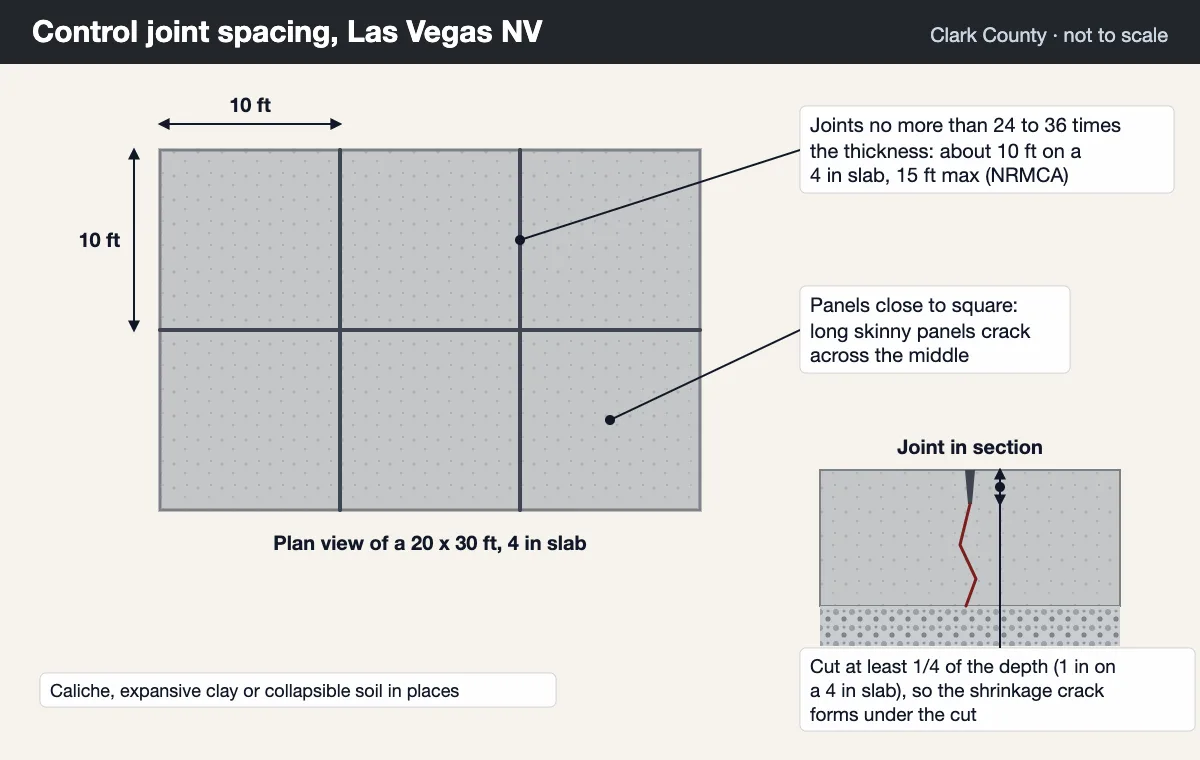
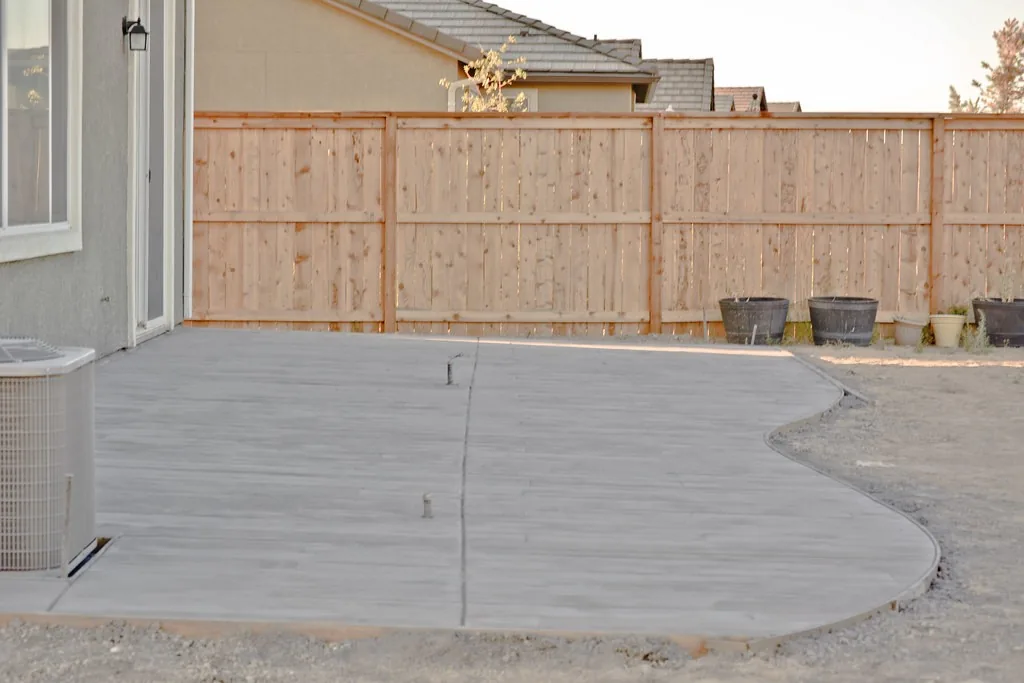
NRMCA calls joints simply pre-planned cracks. A contraction joint is a groove that creates a weak line so the slab cracks there, out of sight, instead of across the middle of a panel. Its guidance for slabs on grade:
- Space joints no more than 24 to 36 times the slab thickness: about 10 feet for a 4-inch slab, and no more than 15 feet in any case.
- Keep panels square or nearly so, with the length no more than 1.5 times the width, and avoid L-shaped panels.
- Cut joints at least one quarter of the slab thickness deep, and never less than 1 inch.
- Saw conventional joints within 4 to 12 hours after finishing. ACI's FAQ notes that in hot weather saw cuts may need to go in within about 1 hour.
- Use isolation joints where a slab meets a wall, footing, column or another slab, so each can move on its own.
If your slab has cracked in a straight line inside a joint groove, the joint did its job. If it cracked across a long, narrow panel with no joint, the layout is the likely cause.
Does rebar or wire mesh stop cracks?
No. NRMCA says wire mesh and reinforcement cannot prevent cracking, but when placed in the right location they can reduce crack width, keeping cracks and joints from opening up. It also says concrete cover of at least 2 inches over the steel helps prevent cracks caused by rusting reinforcement.
Las Vegas Valley soils and slab cracks
The ground under the valley adds causes that a generic crack guide will not mention. These come from Clark County, the Nevada Bureau of Mines and Geology, UNLV research and a 2016 geohazards presentation to the Southern Nevada chapter of the ICC.
Expansive clay
Some clays expand when water is introduced. The 2016 presentation says expansive clays are typically more severe in the north and east parts of the valley. Clark County's Expansive Soil Guidelines Map, based on a 2000 Nevada Bureau of Mines and Geology study, grades the valley's near-surface soils by swell potential: 0 to 4% none to low, 4 to 8% moderate, 8 to 12% high, and above 12% critical, where special geotechnical consideration applies. The map shows general trends, and the county advises that conditions at a specific site can vary considerably.
Collapsible soils
The same presentation describes hydrocollapsible soils, typically silts, low-plasticity clays and fine sands, that collapse when water is introduced, also mostly in the north and east valley. For a slab, that means settlement cracks can show up after the ground gets wet, for example near a leaking line, an irrigation zone or a downspout.
Caliche and differential settlement
Caliche, a calcium carbonate cemented layer common in the valley, is not a crack cause by itself. A UNLV engineering paper calls a substantial continuous layer an excellent bearing surface, and says caliche causes damage only indirectly, as differential settlement when a structure is partly on caliche and partly on compressible soil. A slab poured half on hardpan and half on loose fill can crack along that line. More in the caliche guide.
Fissures and subsidence
The Nevada Bureau of Mines and Geology says groundwater pumping caused local subsidence of as much as 6 feet in the valley since the 1930s, with local fissuring of the ground. The 2016 presentation places fissures generally in the middle to north part of the valley. A long crack that lines up with cracks in a nearby wall or street is worth reporting to a professional.
Sulfates and chemical heave
The presentation also lists sulfate attack as a problem throughout southern Nevada: sulfates react with the cement and show as etching on concrete, and the remedy is a more sulfate-resistant mix. It notes chemical heave usually near wash areas.
Is my crack a problem? Signs worth a closer look
ACI says cracks may affect appearance only, or may indicate significant structural distress, and that a crack may be the whole problem or a pointer to a bigger one. These signs suggest the cause may be more than shrinkage:
- One side of the crack sits higher or lower than the other.
- The crack keeps getting wider or longer over months, not just in the first weeks.
- The slab has tilted toward or away from the house, changing how water drains.
- Cracks appeared or grew after a leak, heavy watering or a storm.
- White etching or crumbling on the surface along with cracks.
- The crack lines up with cracks in a nearby block wall, house wall or street.
What to do if a concrete slab cracks
Watch it first
For a new crack, mark its ends with a pencil and note the date. If it does not grow and both sides stay level, it points toward ordinary shrinkage. NRMCA notes that as concrete dries, existing cracks can widen a little, so some change in the first months is expected.
Seal or fill a stable crack
Filling or sealing a stable crack mostly keeps water and dirt out and improves its look. ACI points to ACI 224.1R, ACI 546R and related documents for repair methods. Filling does not address a cause such as soil movement or a leak.
Fix the cause, or replace the slab
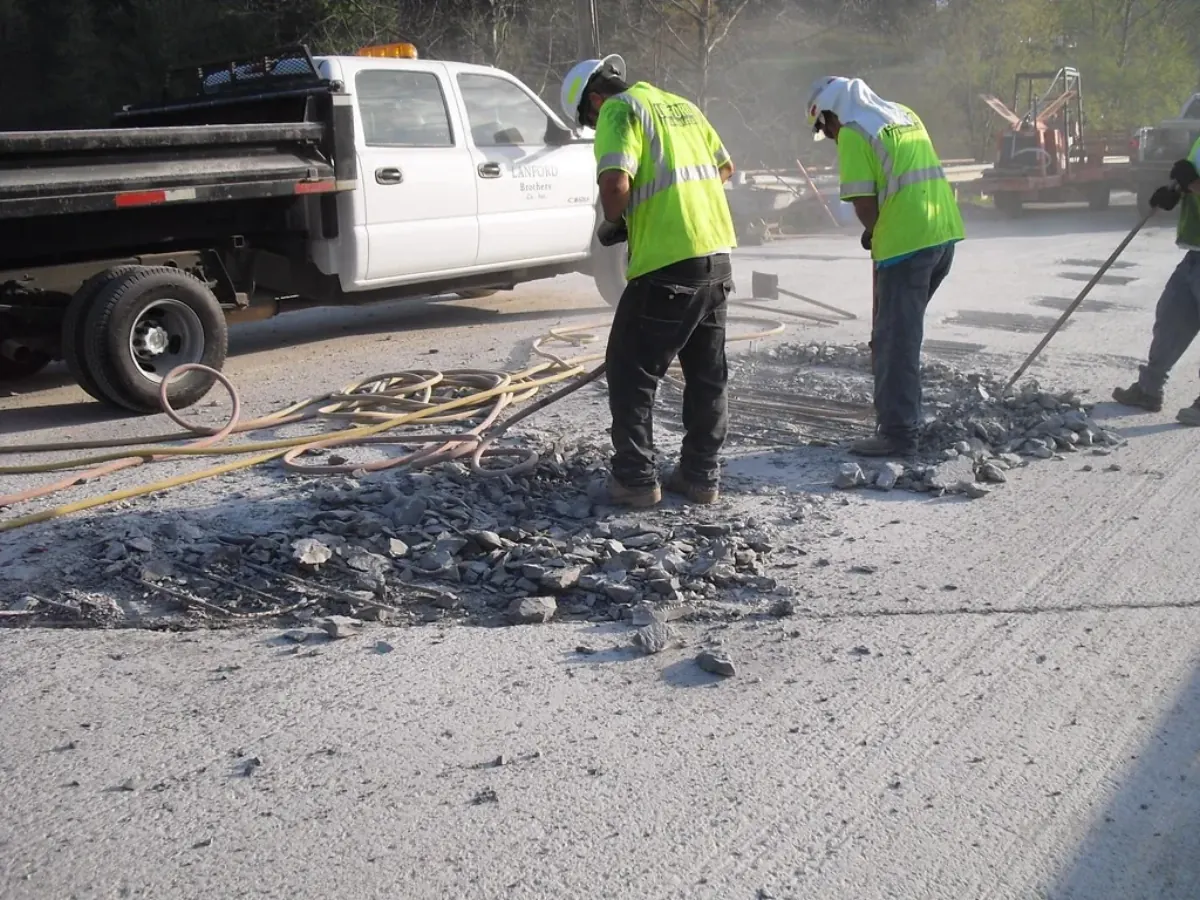
When a slab has heaved, sunk, or broken into several pieces, the fix is usually about the ground: drainage, a leak, or the base. Replacing the slab on a properly prepared base is often the cleaner answer. For removal, HomeBlue's Las Vegas guide (September 2024) gives $1.30 to $2.10 per square foot, and HomeGuide's national guide (May 2025) $3 to $8 per square foot including disposal, with reinforced concrete costing $1 to $3 more. See slab replacement and removal and the Las Vegas concrete slab cost guide.
How a new slab can crack less
You cannot order a crack-free slab, but you can ask about the things that control cracking:
- How will the base be prepared and compacted, and what happens with caliche or soft spots?
- Where will the control joints go, how deep, and how soon after the pour will they be cut?
- Will there be isolation joints at the house, walls, posts and existing slabs?
- How will the slab be cured, and for how long?
- Is a sulfate-resistant mix or a soils check warranted at this address?
- Where will water from roofs, irrigation and the slab itself drain?
Common jobs include a replacement patio slab, a new AC pad and a driveway extension. Check the service area or send a quote request.