RV pads come first in North Las Vegas
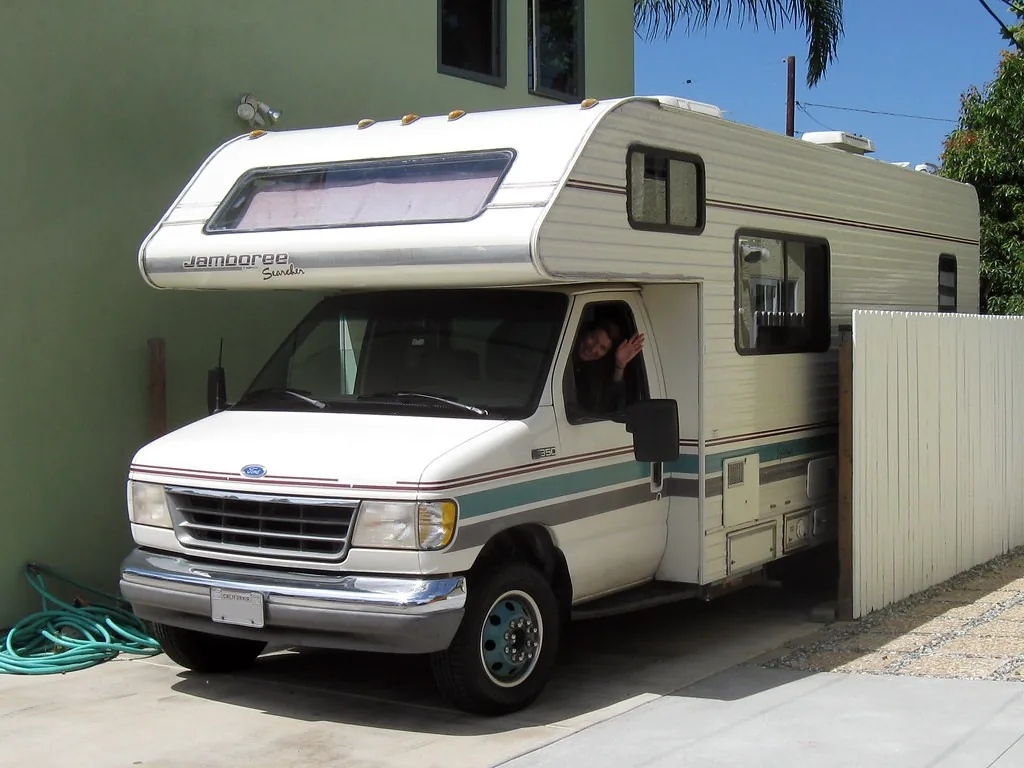
If you are pricing a concrete slab North Las Vegas homeowners most often ask about, it's the RV pad, and the city's zoning code is unusually exact about it. Section 17.24.040 of the North Las Vegas Municipal Code covers "Parking of Motor Homes or Recreational Vehicles in Residential Setbacks", and the rules read like a checklist. Plan the pad around them before you ask anyone for a price, because the location rule alone decides whether the project works on your lot.
| Item | The rule | Design consequence |
|---|---|---|
| (i) Surface | Parked on a paved surface: concrete, brick, pavers or similar | Gravel or bare decomposed granite won't do for the parking spot itself |
| (ii) How many | No more than three vehicles of any kind on the property, and only one motor home or RV | One RV pad per lot is the practical ceiling |
| (iv) Where | Rear yard, side yard or corner side yard only | No front-yard RV slab, whatever its size |
| (v) Access route | Access on concrete, brick, pavers, decomposed granite or similar; from rolled curbing only unless Public Works approves | The drive-up path can be DG, but a vertical curb needs Public Works sign-off |
| (vi) Utility boxes | Access can't cross a utility box unless the Utilities Department allows it | Check where the meter and pedestal boxes sit before you lay out the approach |
| (vii) Screening | A wall at least 6 ft high with decorative gates | Gate width, wall height and footing location shape the pad |
Source: North Las Vegas Municipal Code Title 17, section 17.24.040 (Ord. No. 2591, effective 10-1-2011, later amended), read on Municode October 13, 2026. The use table lists RV parking as conditional in the O-L, R-E, R-EL and R-1 districts, cross-referenced to this section.
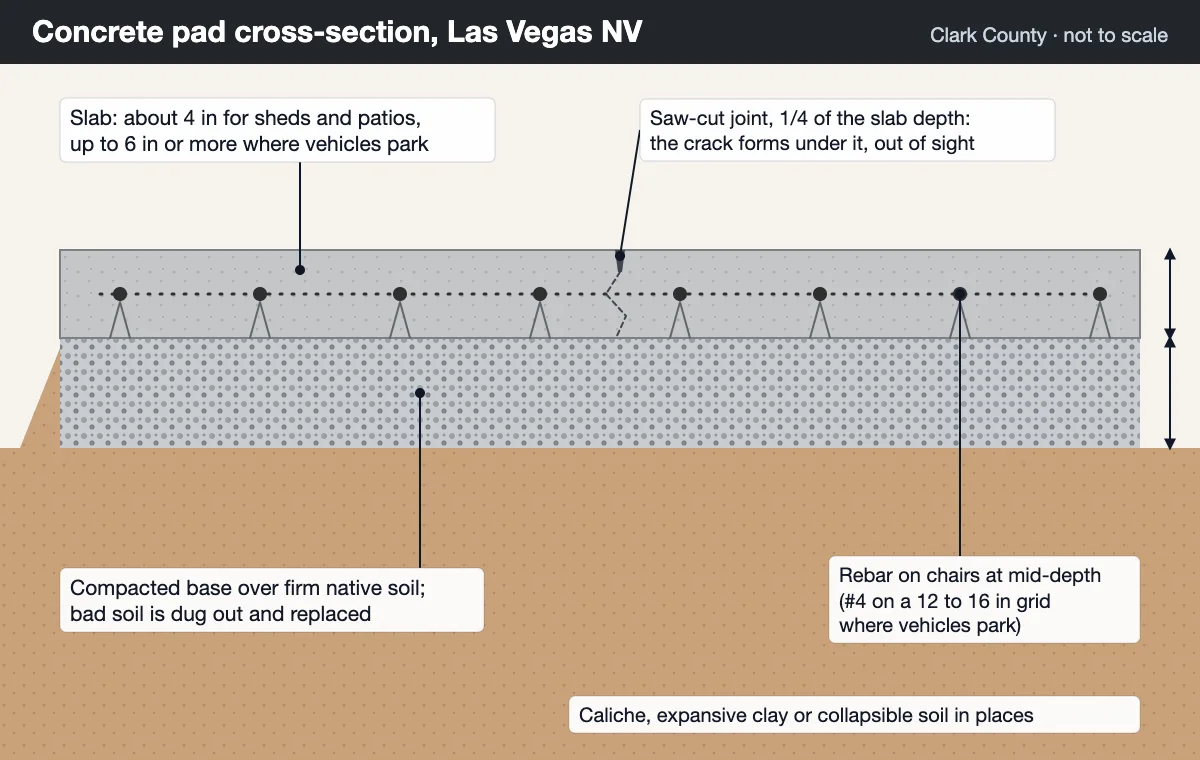
The access line is the one people miss. The parking pad has to be paved, but the route to it may be decomposed granite, provided the RV comes off a rolled curb. On a street with a tall vertical curb, the Department of Public Works has to approve the crossing, and that is work in a public place, which brings in the separate permit covered below. Our concrete RV pad page goes into thickness and reinforcement, and the RV pad size guide helps size the slab to the rig plus door swing and walking room.
The half-front-yard limit on concrete
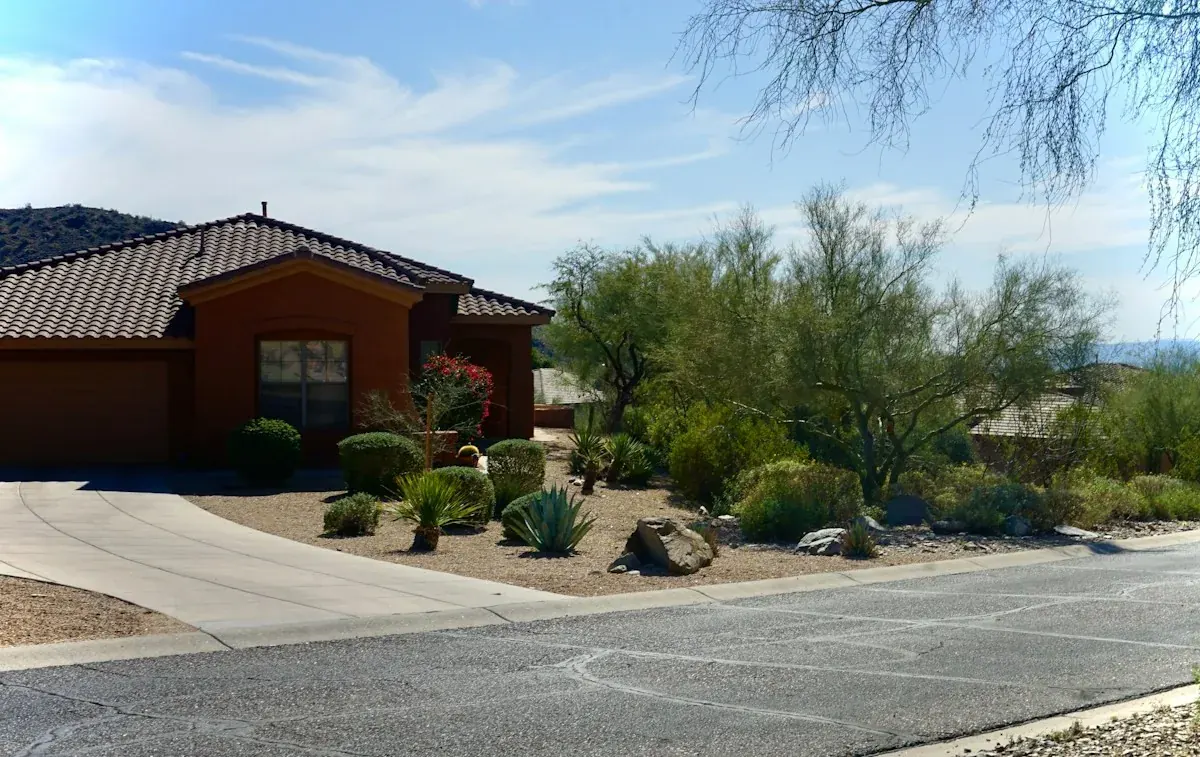
North Las Vegas also caps front-yard paving. NLVMC 17.24.040(C)(2)(c) reads: "Not more than one-half of the front yard area shall be used for parking or surfaced with hardscape. The front yard area is the entire area from the front of the house to the front property line." The existing driveway counts toward that half. So before you add a driveway extension or a parking pad beside the garage, measure the whole front yard, measure the concrete already there, and see how much is left. On a narrow tract lot with a wide three-car driveway, the answer may be very little.
North Las Vegas permits for a slab
Building permit: usually exempt
NLVMC 15.72.140(D) lists work that needs no building permit. Item 7 covers "platforms, walks and driveways not more than thirty (30) inches (762 mm) above grade and not over any basement or story below; and not a part of an accessible route." Item 1 covers a one-story detached shed or playhouse up to 200 square feet, so a small shed slab and its shed both fall outside the building permit. Item 5 exempts retaining walls up to two feet tall from the top of the footing, unless they hold a surcharge.
Public place permit: needed at the curb
NLVMC 12.08.020 says no one may "make any excavation, remove, relocate, alter, install or construct any facility within a public place" without first applying in writing, on the city engineer's form, for a permit. The chapter defines a "driveway approach" as the part of a driveway on public property between the curb opening and the right-of-way line. So a new curb cut, a widened approach or an RV crossing over the sidewalk all need that permit. The same chapter defines a contractor for this work as someone holding both a Nevada State Contractors Board license and a City of North Las Vegas contractor's license, which is a useful question to ask whoever bids the curb portion.
How these rules compare with Henderson, Clark County, the City of Las Vegas and Boulder City is laid out in the Las Vegas slab permit guide.
What the ground is like in the north valley
This is where North Las Vegas differs from the south and west of the valley. In a 2016 geohazards presentation to the Southern Nevada chapter of the International Code Council, an engineer from Angle Engineering listed the main soil hazards and where they usually occur. Several of them lean north.
| Condition | Where it shows up | Usual remedy named |
|---|---|---|
| Expansive clays (swell when wet) | Typically more severe in the north and east valley | Overexcavation and replacement, modified slab system, moisture conditioning |
| Hydrocollapsible soils (silts, low-plasticity clays, fine sands that collapse when wet) | Typically north and eastern portions | Overexcavation |
| Earth fissures (from groundwater withdrawal) | Generally the middle to north portion | Overexcavation and geo-fabrics |
| Caliche (lime-cemented soil) | Throughout the valley | Breaking or removing it; a good bearing layer once reached |
| Sulfate attack on concrete | Throughout southern Nevada | A more sulfate-resistant concrete mix |
Source: Andrew E. Bowman, P.E., Angle Engineering, Geohazards in Southern Nevada, presentation to the Southern Nevada ICC chapter, May 11, 2016 (snicc.org PDF), read October 13, 2026. Conditions on any single lot vary; the Clark County expansive soil map shows general trends only.
What this means in plain terms: a slab in the north valley is more likely to sit on soil that moves when it gets wet. With a normal of just 4.18 inches of rain a year at the airport (NWS), irrigation and roof runoff are often the bigger source of water at a slab's edge. Keep sprinklers and drip lines from soaking the edge of a new slab, slope the slab away from the house, and expect a careful contractor to ask about the base before quoting. The Nevada Bureau of Mines and Geology adds that groundwater pumping caused as much as 6 feet of subsidence in parts of the valley since the 1930s, along with local fissuring.
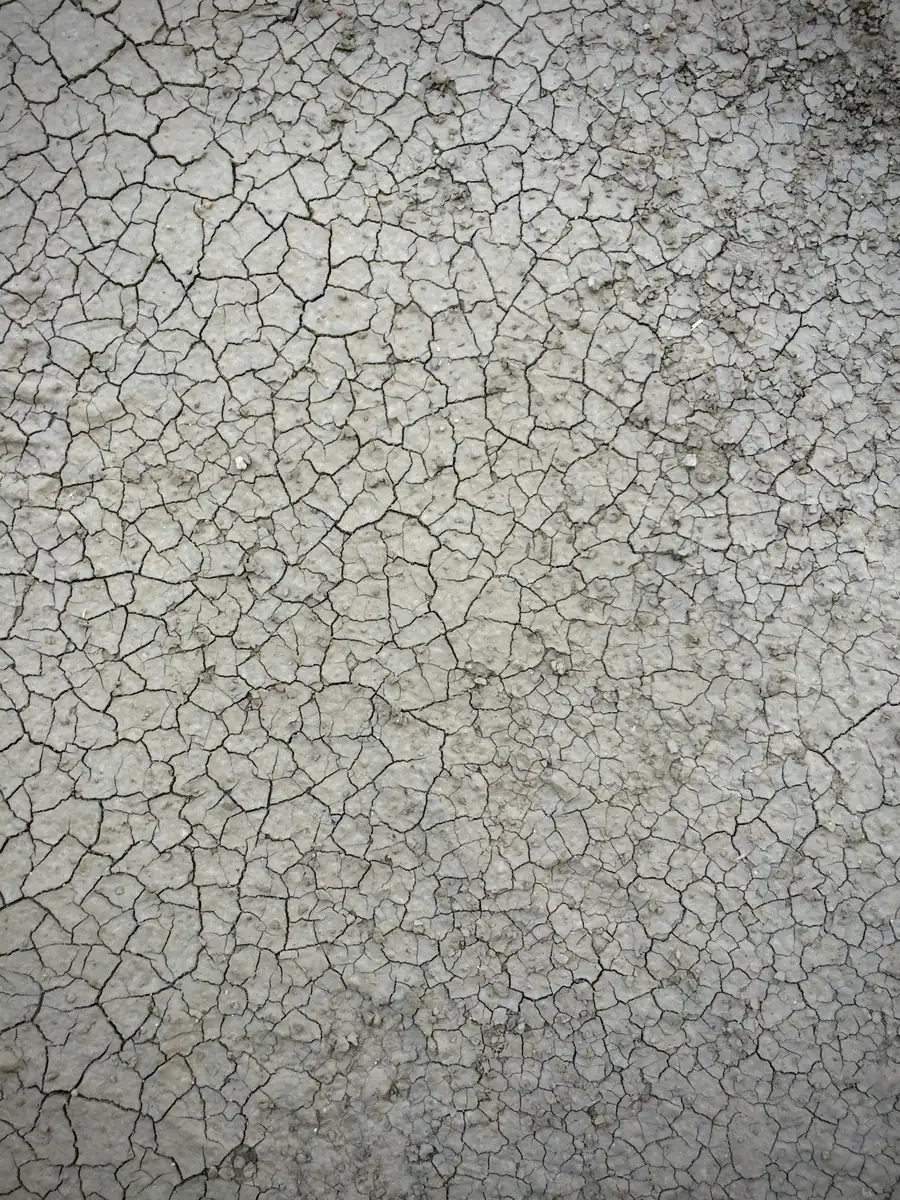
For more on hardpan, read caliche and concrete slabs; for cracks that appear after a slab is in, see the concrete slab cracks guide.
Aliante and the newer tracts
Aliante is North Las Vegas's big master plan. American Nevada Corporation and Del Webb formed North Valley Enterprises in 2001 and bought 1,900 acres in the city; building started a year later and the community opened in May 2003. It was planned for about 7,500 homes and 20,000 residents, and it includes Sun City Aliante, a Del Webb 55-plus community completed in March 2003. Most of those homes are now about twenty years old, so many still have their builder-installed patios and equipment pads.
We couldn't find Aliante's architectural rules published in public, so treat the city rules above as the floor and ask your association what it adds before you lay anything out. Older parts of the city are a different story: North Las Vegas incorporated on May 1, 1946 and had a major growth boom in the early 1960s, so many established neighborhoods have no HOA at all, and the city code is the whole rule book.
Who lives here, and what they build
North Las Vegas counted 262,527 people in the 2020 Census and an estimated 296,653 by July 2025. Its 3.12 persons per household is the highest of the four valley cities, 63.6% of homes are owner-occupied, and the median owner home value is $404,400 (U.S. Census QuickFacts). Bigger households often mean more vehicles, so the three-vehicle rule and the half-front-yard cap are worth knowing early. A few slab types fit North Las Vegas lots well:
- A side-yard RV or trailer pad behind a 6 ft wall and gate, sized to the one RV the code allows.
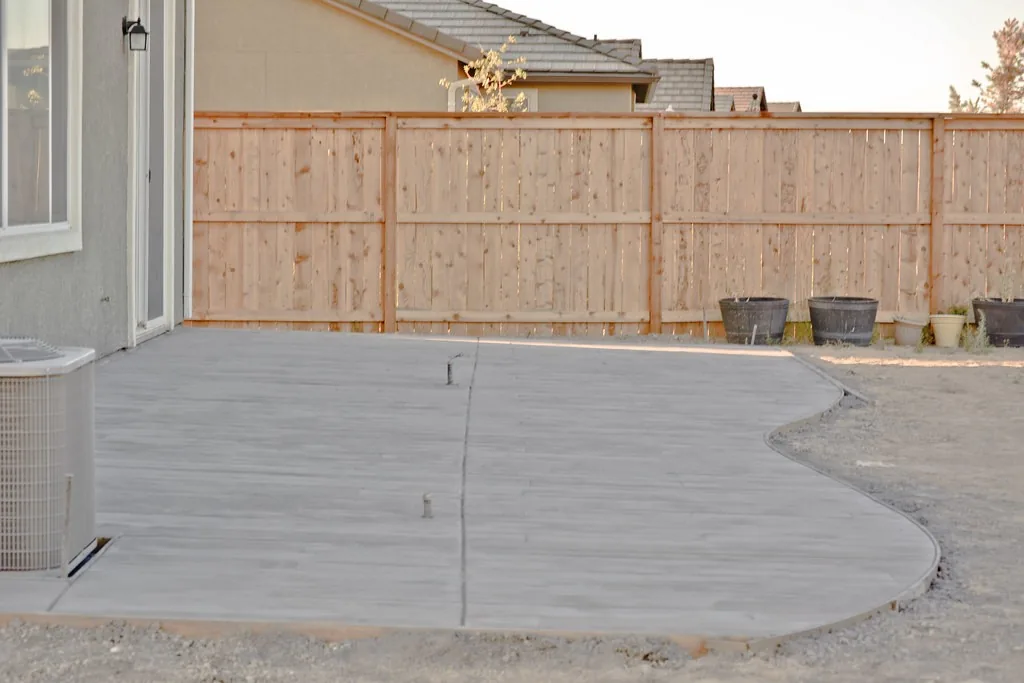
- A patio slab that turns a dirt or rock backyard into usable space. See the patio slab page.
- An AC condenser or pool equipment pad to replace one that has settled.
- Side yard concrete for trash bins, with drainage kept away from the foundation.
- Replacement of a cracked older slab where the base has moved.
Each has its own page: patio slabs, AC and equipment pads, side yard concrete and slab replacement and removal.
Prices for slabs in North Las Vegas
There is no current North Las Vegas-only price source. ProMatcher's North Las Vegas report shows the same averages as its Las Vegas one, and its ZIP 89030 figure of $4.74 to $6.35 per square foot for a 4-inch reinforced slab dates from May 2021. Current valley sources run higher: HomeBlue lists $7 to $12 for a reinforced slab (September 2024), projectcosted $6.11 to $12.21 (August 2026), and handoff.ai $10.20 to $20.10 for a small pad (2026). Concrete itself runs $143 to $172 per cubic yard by strength (HomeBlue, March 2025). A larger RV pad usually lands lower per square foot than a small AC pad, because fixed costs spread over more area. The full breakdown is in the concrete slab cost guide.
Checks before you hire in North Las Vegas
- Confirm a C-5 concrete license with the Nevada State Contractors Board; NAC 624.640 requires the license number and its monetary limit on every bid.
- For anything at the curb, ask whether the bidder also holds a City of North Las Vegas contractor's license, which NLVMC 12.08 expects for public-place work.
- Mark utility boxes and the meter before anyone lays out an RV approach.
- Measure the front yard and existing concrete against the one-half rule before planning a driveway extension.