Last reviewed October 2026
Caliche soil in Las Vegas has a reputation it only partly deserves. Gardeners fight it, excavators charge for it, and plenty of websites blame it for cracked concrete. The sources that study it, University of Nevada Cooperative Extension, UNLV engineers and USDA soil scientists, paint a more useful picture, and that is what this page sticks to.
What is caliche soil?
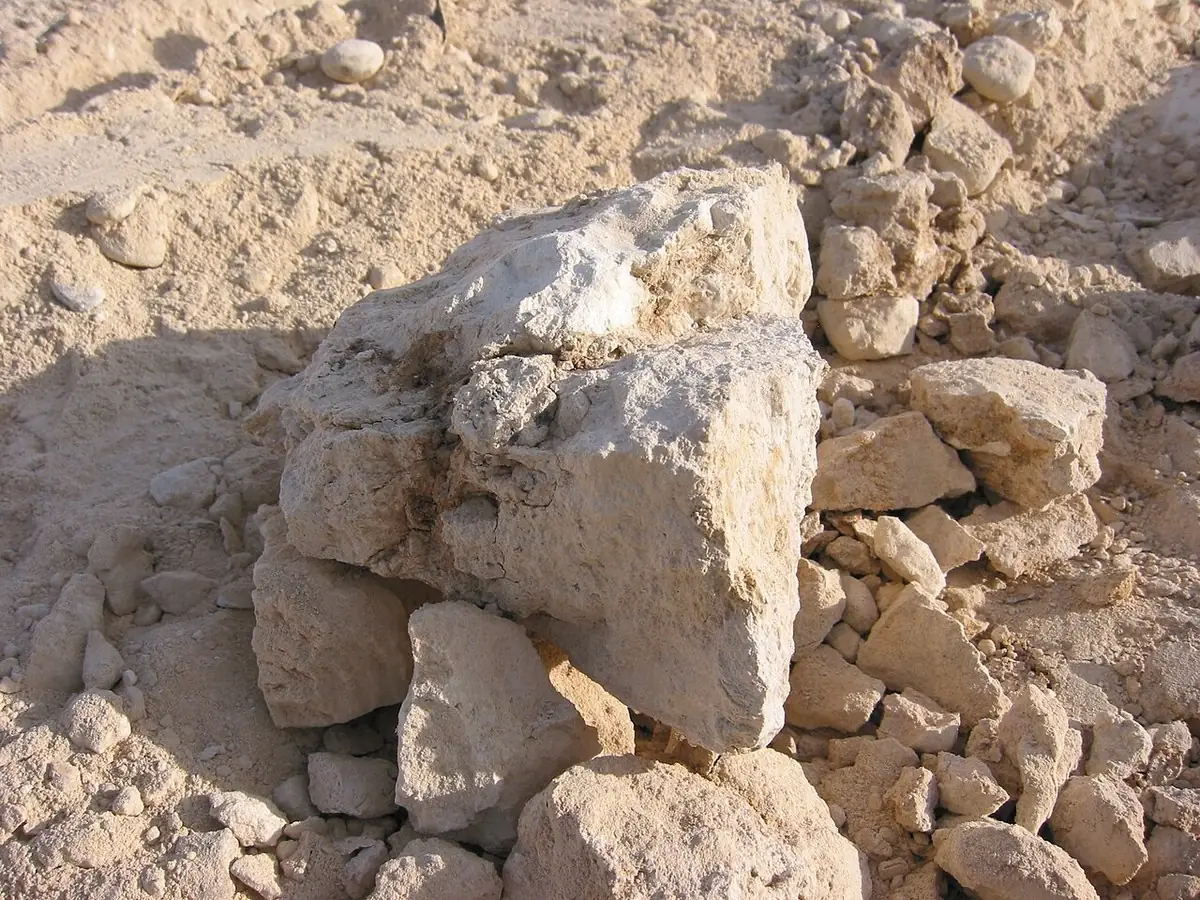
Caliche is a layer of soil cemented together by lime (calcium carbonate). University of Nevada Cooperative Extension calls it a term commonly used in Southern Nevada for a cemented layer that "may be a few inches or several feet thick, and acts like a hardpan, blocking drainage." It is also alkaline.
Engineers describe it the same way in more detail. A UNLV paper on Las Vegas cemented soils says caliche forms when calcium carbonate precipitates in soils where evaporation exceeds precipitation, cementing both fine and coarse sediments. For engineering purposes it is "a rock-like material that occurs in soil deposits erratically in thickness, hardness, and lateral extent." That last part is the important one for a slab: you cannot predict caliche from the yard next door.
Caliche and Las Vegas soil, by the numbers
Here are the measurable facts from the sources, in one place:
| Fact | Figure | Source |
|---|---|---|
| Caliche layer thickness | A few inches to several feet | UNR Cooperative Extension |
| Southern Nevada soil pH | 8.0 or higher | UNR Cooperative Extension |
| Caliche compressive strength | Up to 15,000 psi | Southern Nevada ICC chapter geohazards presentation, 2016 |
| Depth to cemented layer, Las Vegas soil series | 3 to 14 inches | USDA Official Series Description, rev. 2015 |
| Calcium carbonate, Las Vegas soil series | Up to 85%, averaging more than 40% | USDA Official Series Description |
| Rock fragments, Las Vegas soil series | 5 to 35%, mostly gravel-size caliche | USDA Official Series Description |
| Annual rain at the airport | 4.18 inches (1991 to 2020 normal) | National Weather Service Las Vegas |
| Historic land subsidence from groundwater pumping | Locally as much as 6 feet since the 1930s | Nevada Bureau of Mines and Geology |
Sources: UNR Cooperative Extension SP-01-15; Bowman, Geohazards in Southern Nevada (SNICC, May 11, 2016); USDA NRCS Official Series Description, Las Vegas series (rev. 09/2015); NWS Las Vegas Precipitation Overview; NBMG Subsidence page. Read October 13, 2026. The 3 to 14 inch depth applies to the Las Vegas soil series only, not to every yard.
What type of soil is in Las Vegas?
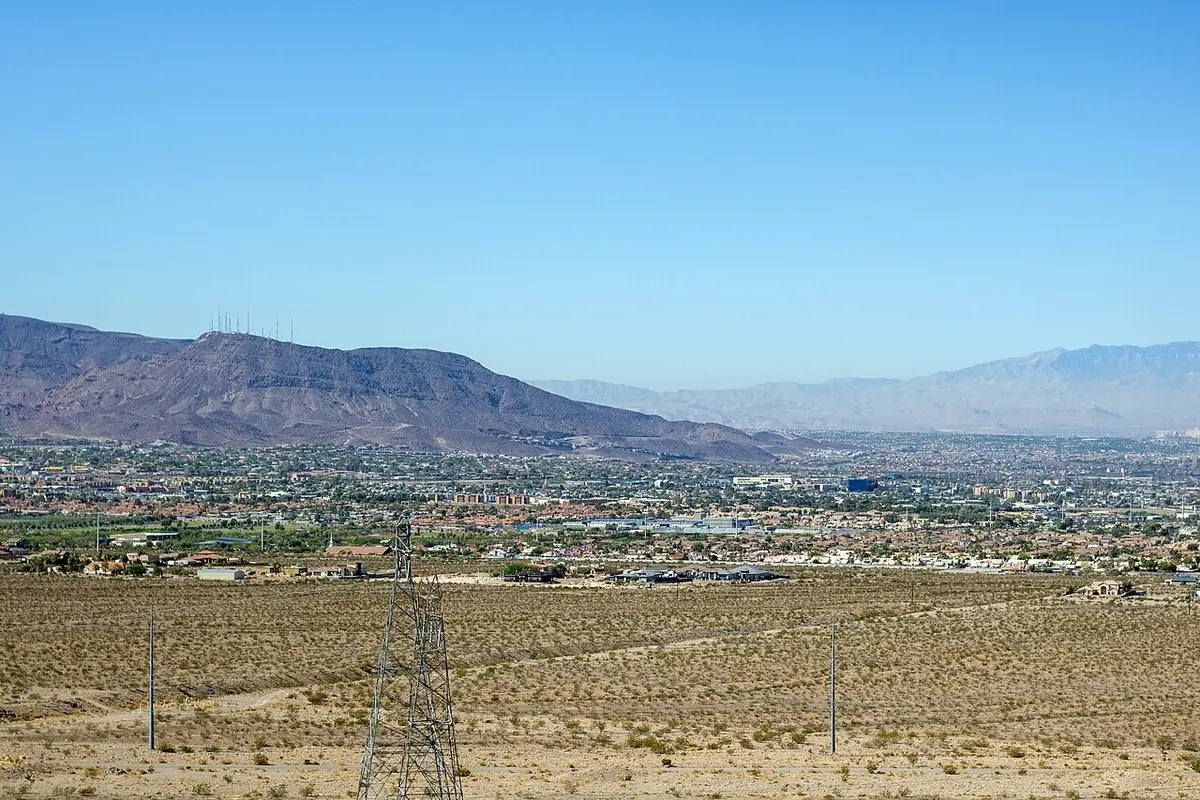
Las Vegas soils are mostly alkaline desert soils formed from alluvium, many with a caliche layer. The soil series named after the city shows it well. The USDA describes the Las Vegas series, established in Clark County in 1923, as shallow, well drained soils formed in alluvium from limestone and lake sediments on old basin floors. Its cemented hardpan, the petrocalcic horizon that is caliche, starts only 3 to 14 inches down, and water moves moderately slowly above it.
Other series differ. The Glencarb series, whose type location is near Nellis Boulevard and Stewart Avenue, is a fine-silty soil on flood plains and basin floors, and the USDA notes some areas have a high water table from irrigation. Neighboring lots can sit on different soils, which is why no agency publishes a caliche depth for each neighborhood, and we do not either.
Caliche and concrete slabs: what it actually means
For a slab, caliche is first a cost and schedule issue. The UNLV paper says: "The greatest problem caliche creates is in its removal, which results in expense, construction delay, and potential vibration damage to adjacent improvements caused by some excavation methods."
As support, it can be an asset. The same paper says a substantial thickness of continuous caliche below a site "can provide an excellent bearing surface," and the Southern Nevada geohazards presentation sums it up the same way: great for load support, and tough digging.
What caliche does to a slab quote
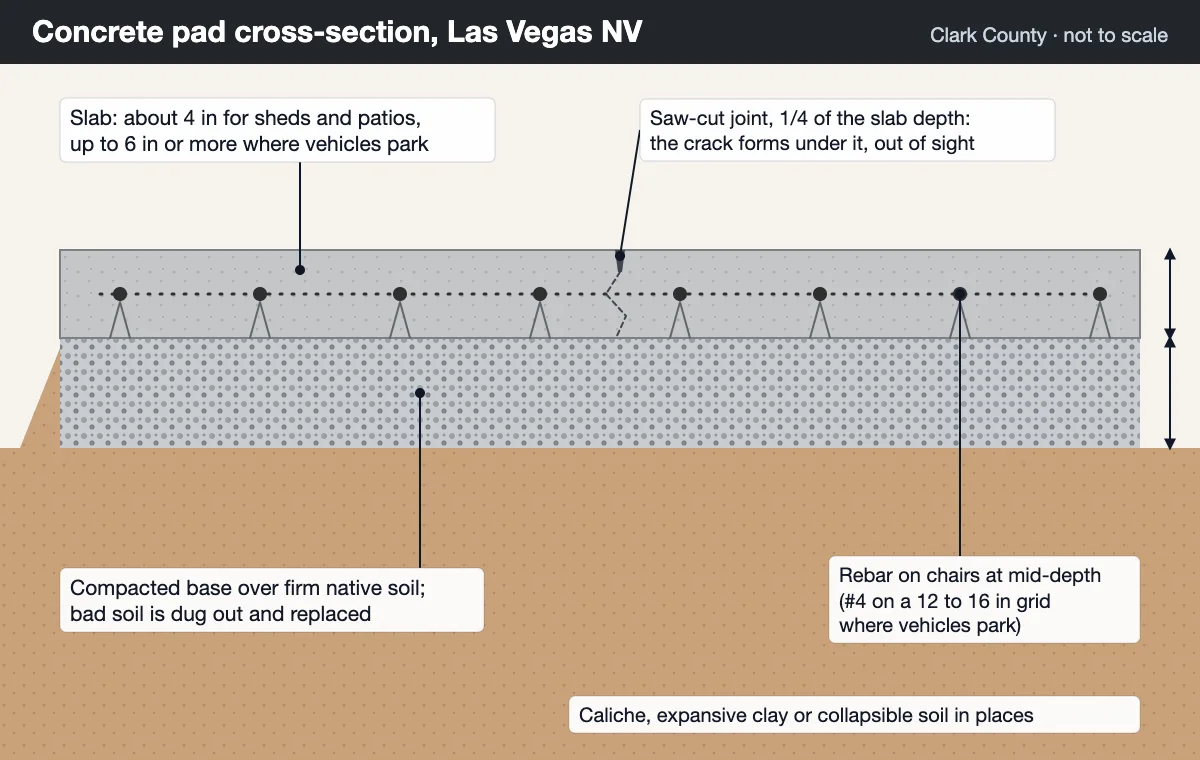
Because caliche is erratic, it is often found only once digging starts. That is why a slab quote may note how hard ground is handled. When comparing bids, ask:
- How is the base graded if caliche sits above the planned depth?
- What equipment will dig it, and is anything nearby (a pool, a block wall) sensitive to vibration?
- Is extra digging priced in, or billed if found?
- How will a pad that crosses from caliche to soft soil be given even support?
- Will the excavated material be hauled away, and is that in the price?
For cost context, see the Las Vegas concrete slab cost guide.
Las Vegas soils that matter more than caliche
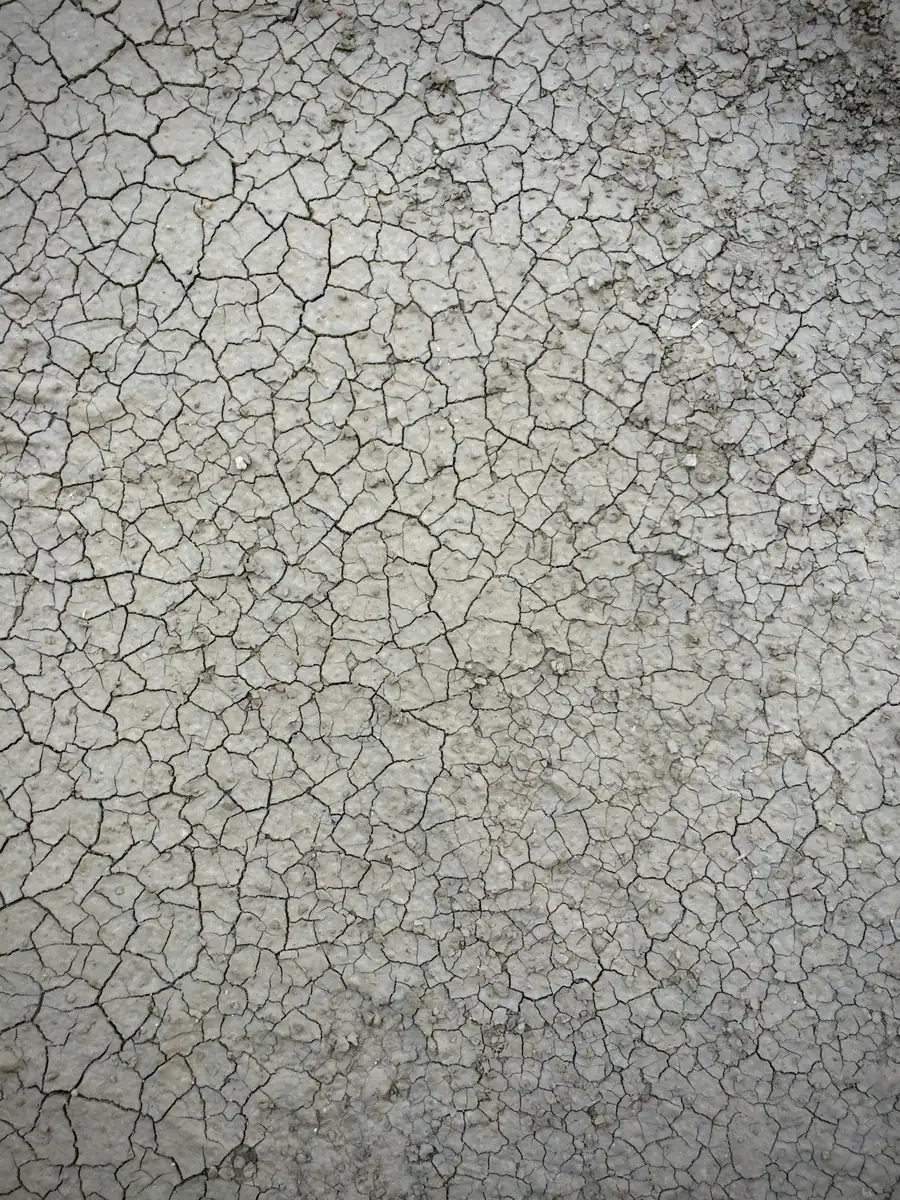
Expansive clay and collapsible soil can matter more for a slab than caliche in parts of the valley. The 2016 geohazards presentation to the Southern Nevada ICC chapter lists each condition and its usual remedy:
| Condition | Behavior and where | Usual remedy |
|---|---|---|
| Expansive clay | Some clays expand when water is introduced; typically more severe in the north and east valley | Overexcavation and replacement, modified slab system, moisture conditioning |
| Hydrocollapsible soil | Silts, low-plasticity clays and fine sands that collapse when wetted; north and east valley | Overexcavation |
| Gypsiferous soil | Near-surface; honeycomb gypsum cannot support increased loads; throughout southern Nevada | Not listed |
| Sulfate attack | Sulfates react with cement and etch concrete; throughout southern Nevada | More sulfate-resistant concrete mix |
| Chemical heave | Usually near wash areas | Thermal barrier under slabs |
| Earth fissures | From groundwater withdrawal; middle to north valley | Overexcavation and geo-fabrics |
Source: Andrew E. Bowman, P.E., Geohazards in Southern Nevada, presentation to the Southern Nevada Chapter of the ICC, May 11, 2016 (snicc.org), slide text. Read October 13, 2026.
The Clark County expansive soil map
Clark County publishes an Expansive Soil Guidelines Map built from a June 2000 Nevada Bureau of Mines and Geology study. It grades near-surface soils as none to low (0 to 4%), moderate (4 to 8%), high (8 to 12%) and critical (greater than 12%), and flags steep slopes and shallow bedrock as special-consideration areas. The map itself warns that conditions at a specific site can vary considerably and advises a registered design professional for site-specific recommendations.
Subsidence and fissures
The Nevada Bureau of Mines and Geology says heavy groundwater pumping caused surface subsidence of locally as much as 6 feet in the Las Vegas Valley since the 1930s, along with local fissuring. That is a historic figure, not a current rate. Fissures are a site-specific issue for an engineer, not something a thicker patio slab solves.
How to fix caliche soil
It depends on what you are building. For planting, UNR Extension's advice is to remove or fracture restrictive layers such as caliche so water can drain, because drainage is critical. For a slab, there is nothing to fix: caliche is either cut to the planned base grade or left as support, and the aim is even bearing across the pad.
Does caliche kill grass?
Caliche makes grass and many plants struggle. UNR Extension says it blocks drainage like a hardpan, and that its alkalinity impairs the growth of many plants. If you are replacing struggling lawn with a slab, note that concrete does not qualify for SNWA's Water Smart Landscapes rebate; the slab area is excluded, though the rest of a converted yard may qualify with approval before any grass comes out.
How much is caliche per yard?
We could not find a published Las Vegas price per yard for caliche, so we do not give one. On a slab job, caliche is not something you buy; it shows up in the quote as extra digging and haul-off.
Is caliche good for foundations?
A thick, continuous caliche layer can be. UNLV's paper calls it a potentially excellent bearing surface, and the Southern Nevada geohazards presentation lists its strength at up to 15,000 psi. The catch is consistency: trouble comes from mixed support, part caliche and part compressible soil. House foundations are engineered by design professionals and are outside what this site covers.
How to find out what is under your yard
- Look up your area on the Clark County expansive soil map for the general trend
- Look up your parcel's soil series on the USDA Web Soil Survey
- Dig a test hole where the slab will go; caliche is pale, chalky and hard to dig
- Tell your contractor about any old pool, fill or wash near the slab area
- For anything structural, follow the map's advice and ask a registered design professional
Planning a slab on hard ground? See concrete slab thickness, patio slabs, slab replacement or concrete RV pads, check the service area, or request a quote.