Concrete patio slabs in Las Vegas, NV: the short answer
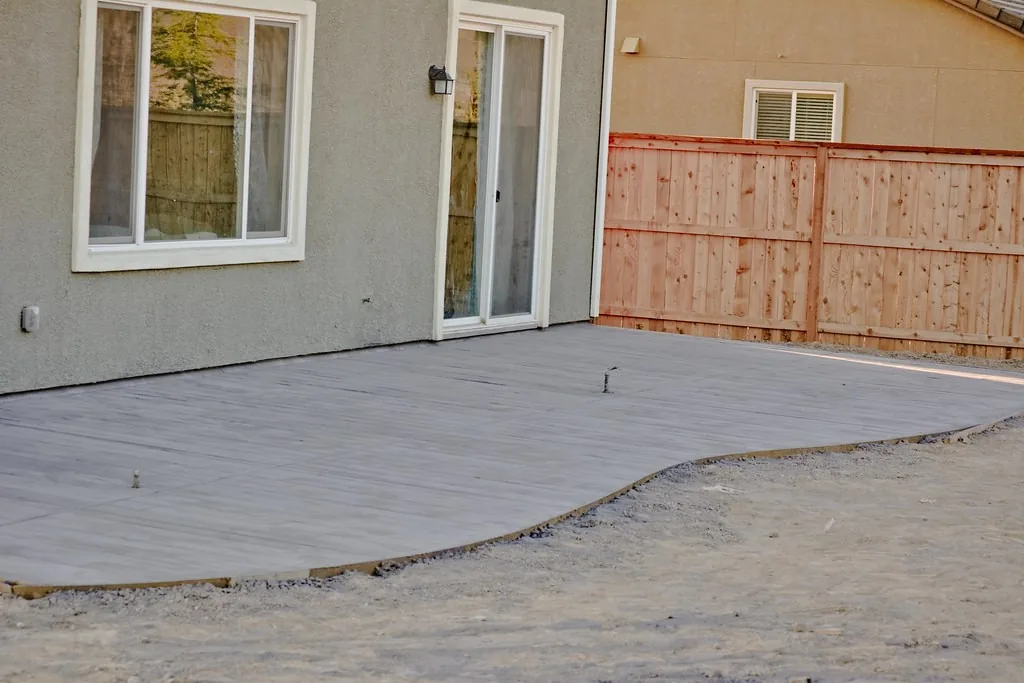
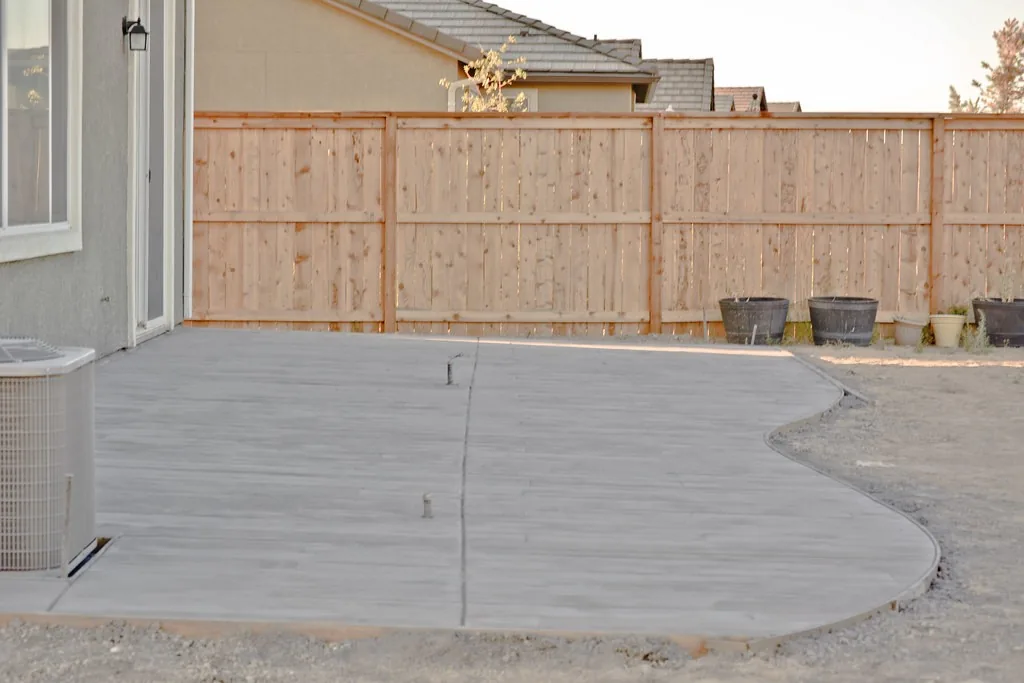
A plain concrete patio in Las Vegas, Nevada is a 4 to 6 inch poured slab with a broom finish, usually priced between $6 and $12 per square foot installed. It doesn't need a building permit as long as it sits on grade (no more than 30 inches up and not over a basement), but a patio cover over it does in the City of Las Vegas, and every master-planned community whose rules we read wants to see your plan before anyone digs. The plain broom-finished concrete patio Las Vegas homeowners ask about most is a rectangle off the back slider, somewhere between 10 x 10 and 20 x 20 feet.
This page covers the plain poured patio slab: backyard slabs, patio extensions and the slab under a pergola or gazebo. Stamped and stained concrete is a separate decorative trade that this site does not handle. If you are comparing other backyard jobs, the same yard often also needs a hot tub pad, an AC or pool equipment pad or a strip of side yard concrete, and pricing them together can make the delivery minimum easier to swallow.
What a patio slab costs in Las Vegas
Most 2024 to 2026 price guides land between $6 and $12 per square foot for a plain reinforced slab, and the sources built on Las Vegas data fall inside that same band. National averages run a little lower; one licensed local contractor advertises $10 to $15 for shed and patio flatwork. Here is what each source says, with the date on its page.
| Source (page date) | Area | Scope | Price |
|---|---|---|---|
| projectcosted (Aug 2026) | Las Vegas | Plain slab, wage-index model | $6.11 to $12.21 / sq ft |
| handoff.ai (2026) | Las Vegas | Cement slab, materials and labor | $6.70 to $12.20 / sq ft |
| HomeBlue (Sep 2024) | Las Vegas | Reinforced slab | $7 to $12 / sq ft |
| projectcostatlas (Dec 2025) | Las Vegas | 350 sq ft patio or slab | $3,080 to $8,470 (typical $5,390) |
| HomeGuide patio (Jul 2025) | National | Plain concrete patio | $4 to $12 / sq ft |
| Angi patio (Sep 2026) | National | Concrete patio, 18,358 projects | Avg $3,557; most $1,919 to $5,394 |
Swipe the table sideways to see every column →
Compiled October 2026 from HomeBlue, handoff.ai, projectcosted, projectcostatlas, HomeGuide and Angi. National figures are labeled national and are not Las Vegas quotes. Older ProMatcher Las Vegas reports ($4.80 to $6.43 per sq ft) date from 2018 to 2021 and are left out as stale.
Patio slab cost by size
Sizes people price most often, with HomeGuide's national plain-patio figures beside a Las Vegas estimate. The 10 x 10 and 20 x 20 Las Vegas rows are published figures; the other Las Vegas rows are our arithmetic from the published per-square-foot range, so read them as estimates.
| Size | Sq ft | HomeGuide plain patio (national, Jul 2025) | Las Vegas at $6.11 to $12.21 / sq ft |
|---|---|---|---|
| 10 x 10 | 100 | $400 to $1,200 | $611 to $1,221 (published) |
| 12 x 12 | 144 | $600 to $1,700 | About $880 to $1,758 (estimate) |
| 16 x 16 | 256 | $1,000 to $3,100 | About $1,564 to $3,126 (estimate) |
| 20 x 20 | 400 | $1,600 to $4,800 | $2,442 to $4,885 (published) |
| 24 x 24 | 576 | $2,300 to $6,900 | About $3,519 to $7,033 (estimate) |
Swipe the table sideways to see every column →
Las Vegas column: projectcosted (Aug 2026) publishes the 100 and 400 sq ft rows; the other rows multiply its $6.11 to $12.21 per sq ft range by the area and are estimates, not quotes. HomeGuide column: HomeGuide concrete patio cost guide, July 10, 2025.
What pushes a patio price up or down
- Tearing out an old patio first. Las Vegas demolition runs $1.30 to $2.10 per sq ft (HomeBlue, 2024); national guides run $3 to $8 per sq ft with disposal, and HomeGuide puts a 20 x 20 patio removal at $1,200 to $3,000.
- Grading and base. HomeGuide lists grading at $0.40 to $2.00 per sq ft and a gravel base at $1 to $3 per sq ft (national, Feb 2026). Angi says site prep can add $1,000 to $3,200.
- Caliche. A UNLV engineering paper on Las Vegas soils says the biggest problem caliche creates is removal: expense, delay and vibration risk to nearby improvements.
- Small size. Small slabs carry a minimum charge; HomeBlue's Las Vegas page notes a 3 x 3 slab price includes one. Ordering less than a full truck adds a short-load fee, about $53 per cubic yard extra in HomeGuide's national data.
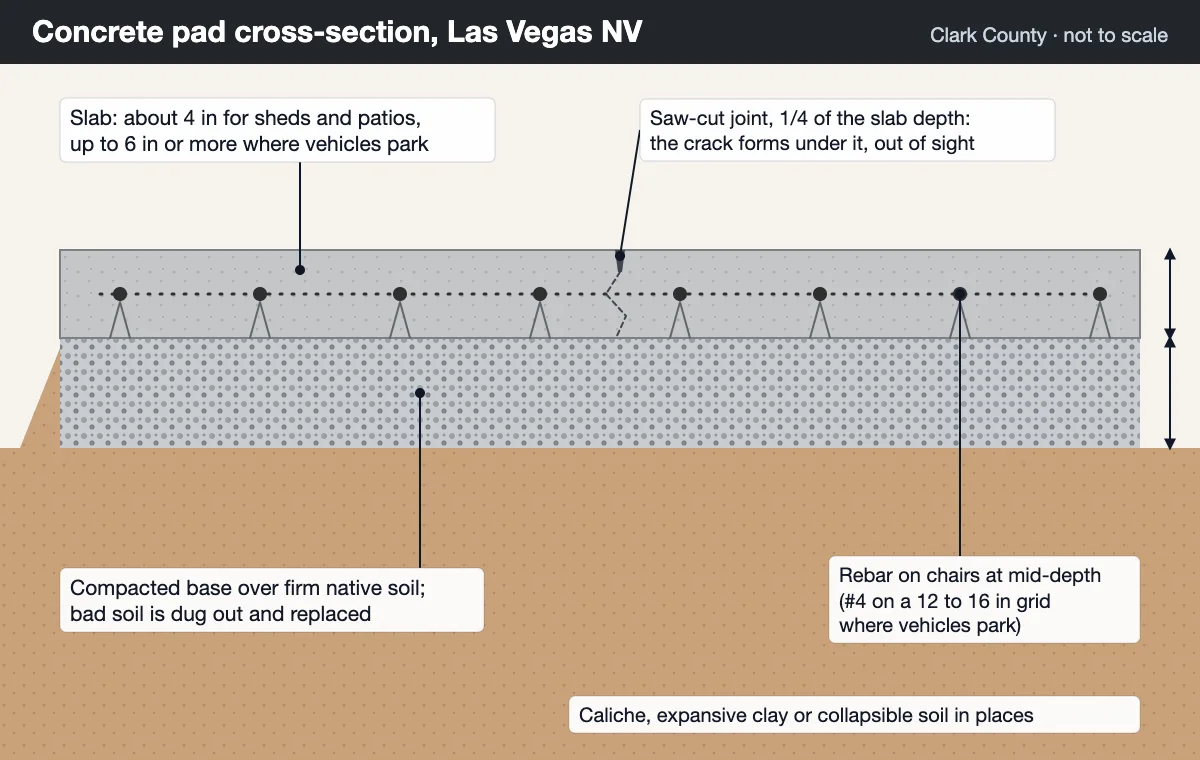
- Thickness and reinforcement. Going from 4 to 6 inches adds roughly $2 per sq ft in HomeGuide's table. Rebar and mesh add-on figures vary by source, so ask for it as its own line on the quote.
- Access. A backyard behind a block wall with no gate wide enough for equipment means more hand work.
What concrete is used for patios
Patios are poured with ordinary ready-mix, ordered by strength in psi. In Las Vegas, HomeBlue (March 2025) lists 3,000 psi at $143 to $150 per cubic yard, 4,000 psi at $153 to $161 and 5,000 psi at $164 to $172, plus $130 to $290 per truck for delivery. One cubic yard covers about 81 square feet of 4 inch slab (HomeGuide), so a 12 x 12 patio needs roughly two yards. Because Southern Nevada soils can carry sulfates that react with cement, a 2016 geohazards presentation to the Southern Nevada ICC chapter advises a more sulfate-resistant mix, which is worth asking your contractor about.
Is a concrete patio worth it in Las Vegas?
For most backyards, yes, if you want a flat, hard, low-upkeep surface at the lowest price per square foot. Plain concrete is the cheaper tier: HomeGuide puts plain patios at $4 to $12 per sq ft and stained or stamped patios at $8 to $30. Is a concrete patio expensive? Against grass, no ongoing water bill; against gravel, more up front. The catch that matters most in this Valley is water policy: a concrete patio cannot be part of a rebated lawn conversion.
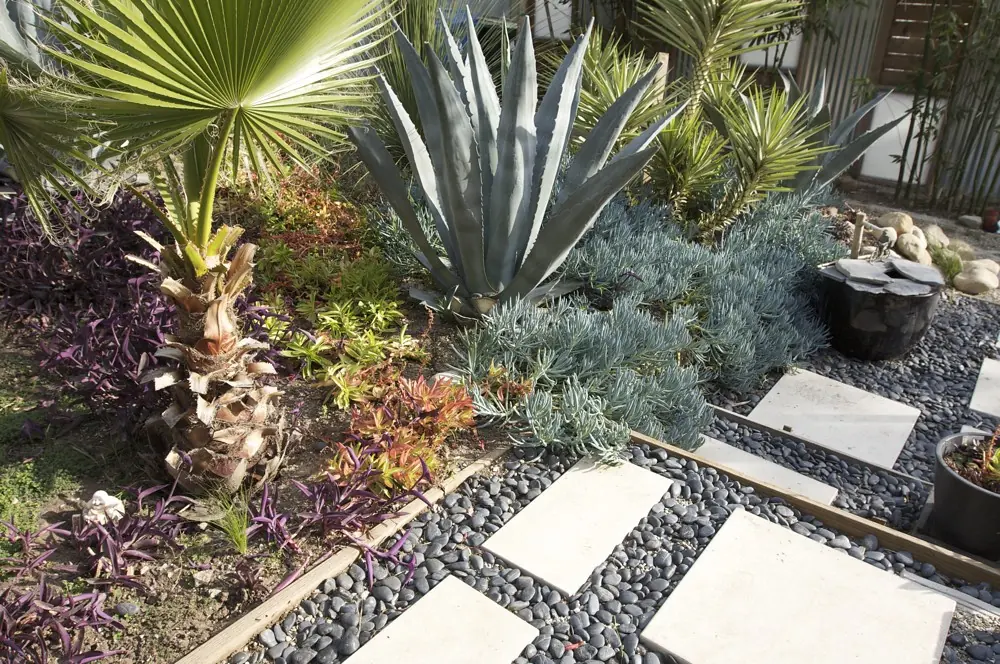
Patio slabs, backyard slabs and pergola or gazebo slabs
Backyard slab
A backyard slab is the same job as a patio slab, just named for where it goes. The price, thickness and permit position are the same. If the slab is for a shed, see the shed slab page, because the 200 sq ft shed rule changes the permit picture.
Slab for a pergola or gazebo
A pergola or gazebo slab is a patio slab with a structure on it, and the structure is what the permit office looks at. Henderson exempts pre-made fabric shades, carports, wood gazebos and similar structures up to 200 sq ft, but only if they are "not permanently affixed to an existing building nor anchored to a permanent foundation." Bolting a gazebo to a new slab can take it out of that exemption. In the City of Las Vegas, building a patio cover is permit work, and detached accessory structures in the rear yard (patio covers aside) must sit at least 3 feet from side and rear property lines and 6 feet from the house.
Patio extension
Adding on to an existing patio is a new slab doweled or butted against the old one. Expect a visible joint at the seam, and ask how the new slab will be tied to or separated from the old one.
Permits and HOA rules for a Las Vegas patio slab
Every jurisdiction in the Valley exempts an on-grade slab of 30 inches or less from a building permit, but the City of Las Vegas guide also lists "Build a patio or enclose an existing patio" as permit work and does not define the term, so call the city if you are unsure whether your plan counts. The full rule set for each city and the County is in our Las Vegas concrete slab permit guide. In most newer neighborhoods the HOA is the stricter gate:
| Community | What the guidelines say |
|---|---|
| Summerlin North (City of Las Vegas) | Committee approval before any exterior improvement, front, side or rear. Patio slabs count as hardscape. Slabs must not alter the lot's original drainage. Hardscape capped at 60% of front and side yards. |
| Providence (City of Las Vegas) | Design Review approval before exterior changes. Hardscape limited to 20% of the lot, pool decking not counted. Concrete work needs a site plan with location, material and colors. |
| Inspirada (Henderson) | Added concrete in the front or rear yard must be in proportion to the home and lot size. Colored concrete must use integral color. |
| Southern Highlands (Enterprise) | Accessory structures are reviewed and approved before construction, which includes a gazebo or pergola on a new slab. |
Sources: Summerlin North Design Guidelines (Jan 1, 2025); Providence Design Review Guidelines (May 2021); Inspirada Design Review Guidelines (2019 file); Southern Highlands Homeowner Design Manual v3 (May 31, 2017). Sub-associations can be stricter. Check your own HOA's current rules.
How a concrete patio slab is built
Every licensed contractor runs a job their own way, but a plain patio slab goes through the same five stages. These are the tasks Nevada's C-5 concrete license covers: preparing the surface, placing reinforcement, building forms, and pouring and finishing.
- 1Lay out and dig the base
The patio outline is marked, the dirt is cut to depth and the base is compacted. Where a cemented caliche layer turns up, it may need to be fractured or removed so the slab doesn't end up sitting half on rock and half on loose soil.
- 2Set forms and slope
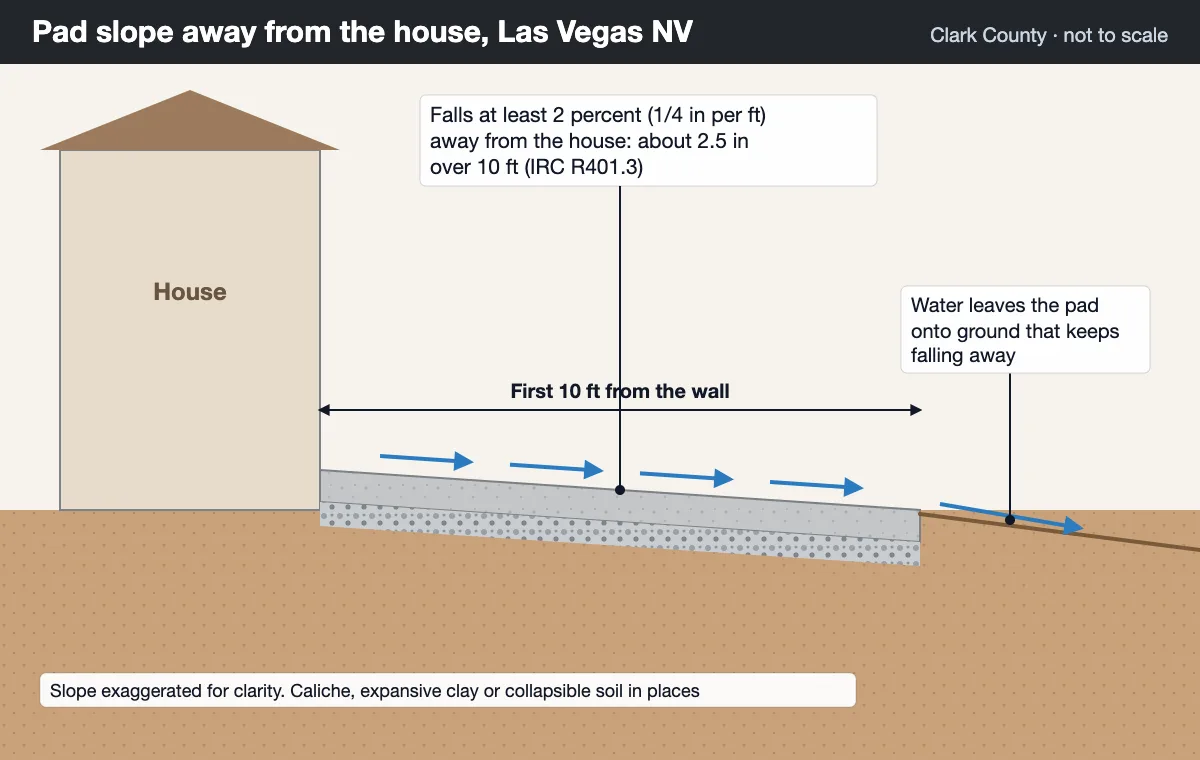
Form boards are staked around the edge and set so water runs away from the house. In an HOA like Summerlin North, the slab also has to leave the lot's original drainage alone.
- 3Place reinforcement
Rebar or wire mesh goes in on supports so it ends up inside the concrete, not under it. Either is common on residential slabs.
- 4Pour, strike off and finish
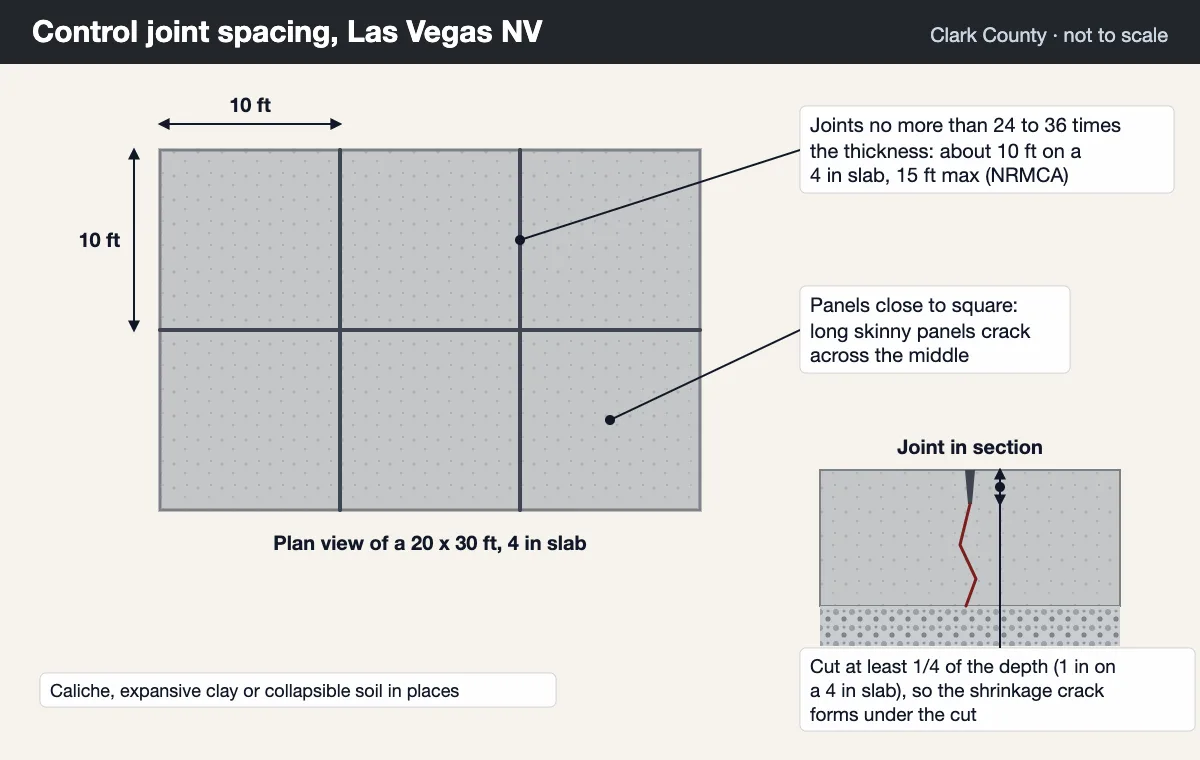
Ready-mix is placed, struck off level with the forms, floated and given a broom finish for grip. Control joints are cut or tooled to guide where shrinkage cracks form.
- 5Cure
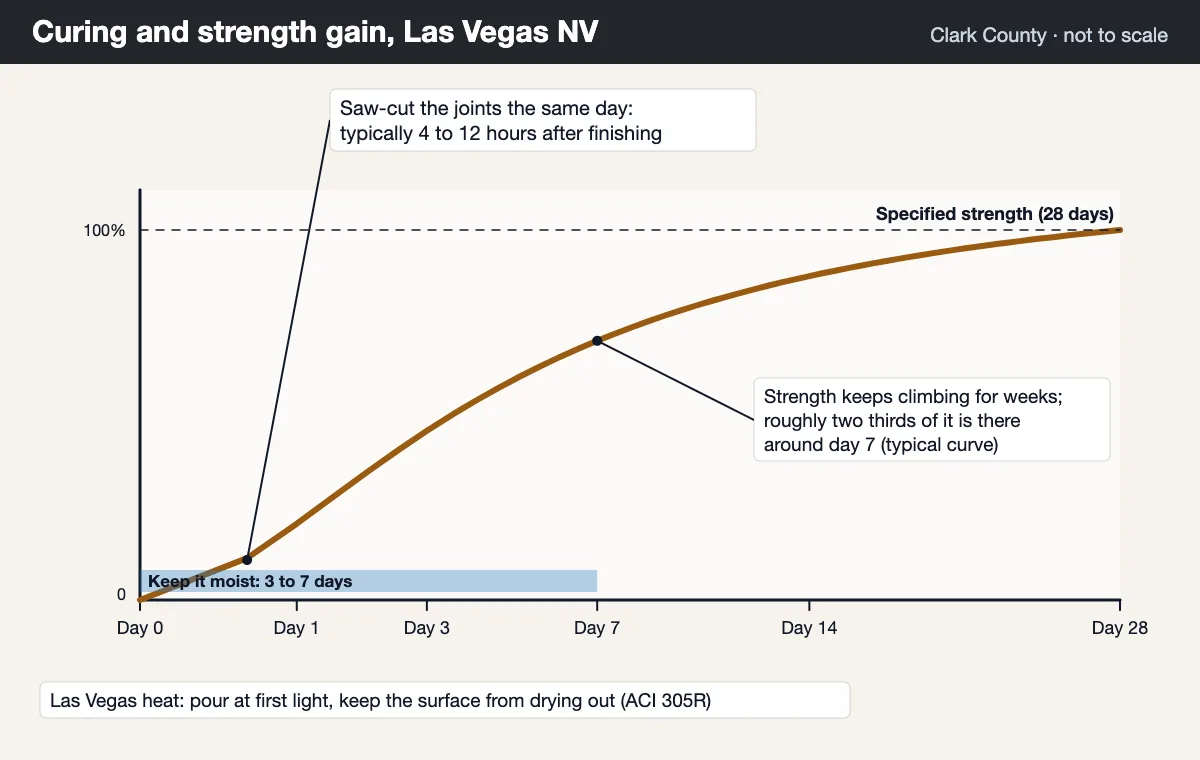
The slab is kept moist or sealed with a curing compound so it doesn't dry out too fast in the desert air. Light foot traffic comes first; furniture and grills come later.
Pouring a patio in Las Vegas heat
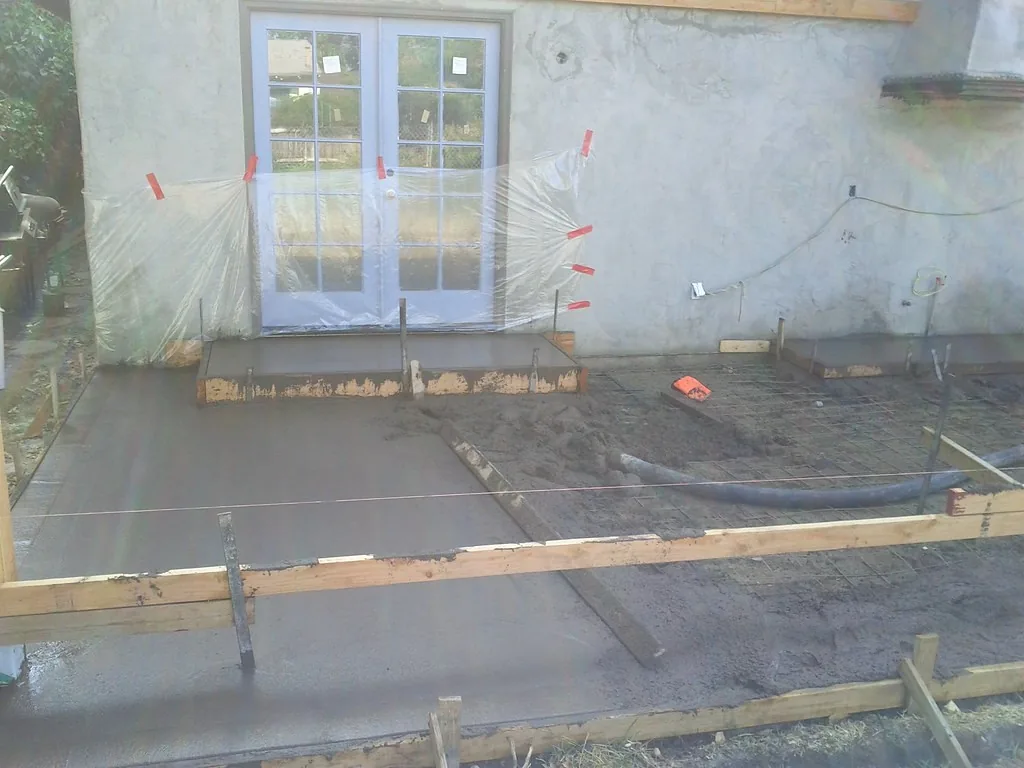
Summer is the hard season for a patio pour. The airport averages 78.2 days a year at or above 100°F, July's normal high is 104.5°F, and the record is 120°F on July 7, 2024 (NWS Las Vegas, 1991 to 2020 normals). ACI's hot-weather specifications cap concrete at 95°F when it leaves the truck unless the mix is proven for hotter use. NRMCA's hot-weather guidance (CIP 12 and CIP 5) responds with early-morning placement, chilled water or ice, set-retarding admixtures and prompt curing. That is guidance, not a code. Our guide to pouring concrete in Las Vegas heat goes further. Winter is milder but not frost-free: the airport averages about 10 nights a year at or below 32°F, and the outer valley runs colder.
Caliche, soil and drainage under a Vegas patio
Caliche is soil cemented together by lime, and it can be a few inches or several feet thick (University of Nevada Cooperative Extension). The soil series named after the city, the Las Vegas series, has that cemented hardpan just 3 to 14 inches down (USDA). Caliche itself is a strong bearing surface. The trouble comes when a slab rests partly on caliche and partly on softer soil and settles unevenly, which is the indirect damage a UNLV paper describes. Expansive and collapsible soils are more common in the north and east of the Valley. Read more in caliche and concrete slabs.
Drainage is the other local issue. The Valley gets only 4.18 inches of rain in a normal year, but monsoon storms in July and August can dump it fast enough to flash flood. A patio needs to shed water away from the house and must not send it into a neighbor's yard or block the lot's drainage path.
Concrete or pavers for a patio?
Does concrete last longer than pavers? We could not find a reliable published lifespan figure for either in Las Vegas, so we won't invent one. The practical differences: a poured slab is one piece with control joints and costs less per square foot in plain form; pavers can be lifted and reset, and ungrouted pavers count as permeable under SNWA's rebate terms. Does a patio need a concrete base? A poured patio is the base. Pavers are normally laid on a compacted base rather than on a slab. And if you are thinking of laying pavers on grass, the lawn has to come out first, which, if you want the rebate, means SNWA approval before you touch it. Compare both in concrete vs pavers in Las Vegas.
How long does a concrete patio last?
There is no verified Las Vegas lifespan number to quote. What shortens a patio's life here is known: uneven support over partial caliche, expansive clay that swells when wet, sulfate in the soil attacking the cement, poor drainage, and a slab cured too fast in summer. Every one of those is handled at the base and pour stage, which is why the prep line on a quote matters more than the finish.
Signs you need a new patio slab
- The patio has sunk or tilted toward the house, so water pools by the slider.
- Cracks have opened wide enough to catch a heel, or one side of a crack sits higher than the other.
- The surface is etched or crumbling, the kind of damage sulfates in Southern Nevada soil can cause.
- You are replacing lawn and want a usable sitting area on the part that won't be rebated.
- You are adding a pergola, gazebo, grill island or hot tub and need a flat, solid base for it.
Cracked but level? Our concrete slab cracks guide helps sort cosmetic cracks from ones worth replacing, and slab replacement and removal covers the tear-out.
Checking the contractor on a patio
In Nevada, concrete work falls under the C-5 classification, every license carries a monetary limit on the size of job it can take, and the license number and limit must appear on every bid (NAC 624.640). You can look both up on the Nevada State Contractors Board site. A DIY patio is possible for an owner improving their own home, but the owner-builder exemption needs an application to the Board, and the under-$1,000 handyman exemption covers repairs, not new slabs.
For the bigger picture, see concrete slabs in Las Vegas, check the concrete slab cost guide or the slab thickness guide, confirm your town on the service area page, or request a free quote.